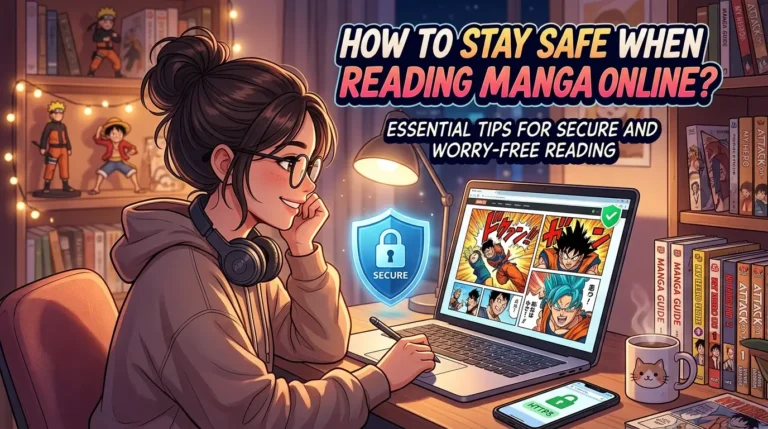
How to Stay Safe While Reading Manga Online
Reading manga online is fun, but not every website is safe. This guide explains how to protect your device, your personal information, and your browsing experience while enjoying your favorite series.

Is it safe to read manga online?
Yes. Reading manga online is safe when you use trusted websites with secure connections. Safe websites protect your connection with HTTPS, avoid fake downloads, and keep pop-up ads under control.
Problems start when readers visit copycat websites. These pages often contain fake buttons, misleading ads, or files that install unwanted software. Checking the website address before opening a page helps you avoid those risks.
How can you tell if a manga website is trustworthy?
A trustworthy manga website gives readers a clean experience without trying to trick them.
Look for these signs:
- The address starts with HTTPS.
- Pages load without endless redirects.
- Download buttons match the content you expect.
- Ads stay separate from chapter navigation.
- The website updates chapters regularly.
- Contact and policy pages are easy to find.
A fake website often copies the design of another site but changes the domain name by one or two letters. Always double check the URL before reading.
Why should you avoid fake download buttons?
Fake download buttons exist to get clicks instead of helping readers. They often open advertising pages or ask you to install unknown apps.
Real manga websites let you read chapters directly in your browser. They do not require random software before opening a chapter.
Closing suspicious tabs right away keeps your browser safer. Never install files from websites you do not trust.
Does public WiFi create extra privacy risks?
Yes. Public WiFi networks allow other people on the same network to observe unprotected traffic. Coffee shops, airports, schools, and hotels all use shared internet connections.
When using public WiFi, it helps to understand how do VPNs work because they encrypt your internet connection and protect your data from people using the same network.
A VPN does not make unsafe websites safe. It protects the connection between your device and the internet, which is different from checking whether a website itself is trustworthy.
What browser habits help keep your device safe?
Small habits make a big difference.
- Keep your browser updated.
- Use strong passwords for accounts.
- Turn on two factor authentication where available.
- Close suspicious tabs instead of clicking through them.
- Avoid installing unknown browser extensions.
- Clear old permissions for websites you no longer visit.
These steps reduce the chance of malware, phishing attempts, and unwanted tracking.
Should you create an account on every manga website?
No. Only create an account when you trust the website and need features such as bookmarks or reading history.
Using the same password across many websites creates an easy target for attackers. A password manager helps you store unique passwords for every account.
What should you do if a manga website keeps redirecting you?
Leave the website immediately. Endless redirects often indicate aggressive advertising or harmful scripts.
Clear your browser tabs after leaving the page. Running a security scan on your device is also a good idea if files started downloading without your permission.
If you want to keep reading safely, return to a trusted source instead of searching through random results.
You can also check our Latest Manga Chapters page for recently added releases without jumping between unknown websites.
Can ad blockers make reading manga safer?
Yes. A trusted ad blocker removes many misleading advertisements before they appear on your screen.
It also reduces accidental clicks on fake buttons. The reading experience becomes cleaner because fewer advertisements load with each chapter.
Choose a well known browser extension from an official extension store instead of downloading one from random websites.
What mistakes put manga readers at risk?
Many problems happen because readers click too quickly.
Common mistakes include:
- Opening websites with strange domain names.
- Downloading unknown APK files.
- Ignoring browser security warnings.
- Reusing the same password everywhere.
- Clicking every advertisement that appears.
- Logging into personal accounts on shared computers.
Avoiding these habits keeps your browsing experience much safer.
Frequently Asked Questions (FAQs)
Can I read manga safely without downloading anything?
Yes. Most trusted manga websites let you read chapters directly in your browser. Reading online removes the need for unknown installers or apps. Our site follows this approach for chapter access. This does not apply if a website offers an official downloadable app from a verified source.
Why do fake manga websites copy popular sites?
They copy familiar designs to trick readers into clicking ads or downloads. The goal is to earn advertising revenue or spread unwanted software. Checking the domain name protects you from these copies. This does not apply to official mirror domains owned by the same publisher.
Does HTTPS mean every manga website is safe?
No. HTTPS protects the connection between your browser and the website. It does not guarantee that the website itself is trustworthy. Our site uses secure connections for reader safety. This does not remove the need to watch for fake pages.
Why do some manga websites show so many pop ups?
Pop ups often come from advertising networks used to support free content. Too many pop ups create a poor reading experience and increase the chance of accidental clicks. Trusted sites keep advertisements separate from chapter navigation. This does not apply to browser notifications that you have already allowed.
Is reading manga on my phone less secure than on my computer?
No. The same safety rules apply on both devices. Keeping your browser updated and avoiding unknown downloads protects your phone just as it protects a computer. Our website works through a browser without requiring extra software. This does not apply if you install apps from unofficial sources.