Top 10 Ways to Monetize Your Webtoons
Webtoons represent a digital comic publishing format designed for vertical scrolling on smartphones and tablets. Platforms such as LINE Webtoon, Tapas, Lezhin Comics, and WebComics distribute webtoon series globally and connect creators with large reader communities.
Webtoon monetization refers to structured revenue generation from webtoon intellectual property, audience engagement, and digital distribution platforms. Creators generate income through advertising programs, subscription systems, merchandise sales, licensing agreements, and crowdfunding.
The following sections explain the ten most established monetization systems used by webtoon creators. Each method describes the revenue model, the involved platforms, and the relationship between creators, audiences, and digital publishing ecosystems.
What Are the Top 10 Ways to Monetize Your Webtoons?
The ten most effective ways to monetize webtoons include platform ad revenue, paid episodes, crowdfunding, merchandise sales, digital subscriptions, licensing deals, Patreon support, print publishing, brand sponsorships, and intellectual property adaptations.
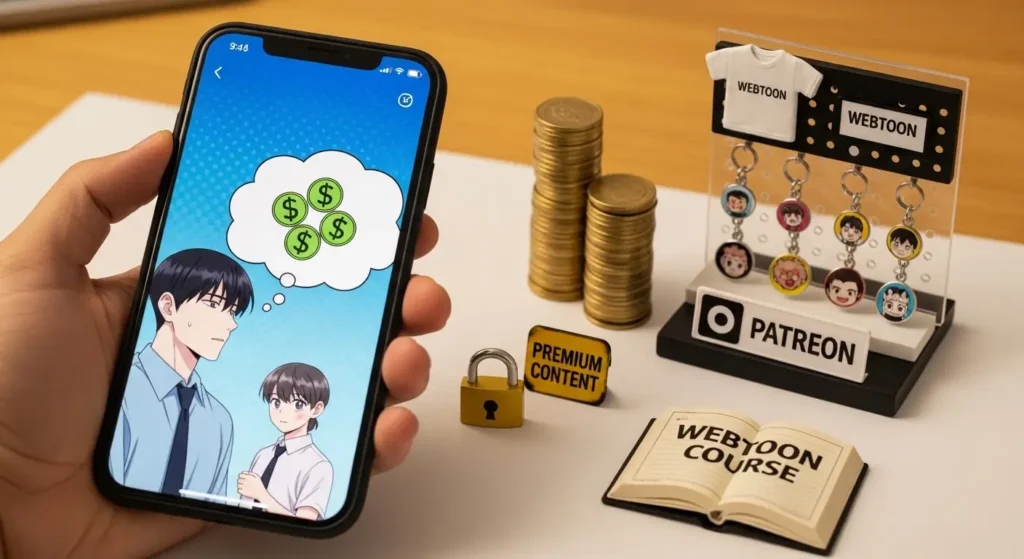
Each monetization method connects webtoon creators with audiences, publishing platforms, and commercial partners that generate direct or indirect revenue.
1. What Is Platform Ad Revenue for Webtoon Creators?
Platform ad revenue generates income when advertising networks display ads alongside webtoon episodes and share advertising earnings with creators.
Platforms such as LINE Webtoon Canvas operate revenue programs where creators qualify after reaching audience thresholds. The LINE Webtoon Ad Revenue Sharing Program distributes income based on advertising impressions and reader engagement.
Advertising networks integrated into webtoon platforms include Google Ad Manager and internal ad distribution systems. Advertisers purchase impressions through cost per thousand impressions (CPM) models.
Example:
A webtoon series published on LINE Webtoon Canvas with 100,000 monthly readers generates advertising impressions during episode views. Advertising revenue is calculated through CPM rates and distributed to the creator through the platform’s revenue program.
Source: Webtoon Entertainment
2. What Are Paid Episodes in Webtoon Platforms?
Paid episodes generate revenue when readers purchase access to premium chapters before free release schedules.
Platforms such as Tapas, Lezhin Comics, and LINE Webtoon Fast Pass implement microtransaction systems. Readers purchase digital currency such as Coins, Ink, or Points.
Revenue is calculated based on episode purchases and distributed to creators according to the platform’s revenue sharing agreement.
Example:
A webtoon chapter released through Tapas Early Access requires readers to spend digital coins. Each purchase contributes to creator earnings based on the number of readers unlocking the episode.
Source: Tapas Media
3. What Is Crowdfunding for Webtoon Projects?
Crowdfunding generates income by collecting financial contributions from audiences to fund webtoon production.
Platforms such as Kickstarter and Indiegogo allow creators to present project campaigns with funding targets. Supporters contribute money in exchange for rewards such as exclusive illustrations, printed editions, or signed merchandise.
Crowdfunding supports production costs including illustration software, drawing tablets, and creator time investment.
Example:
A webtoon creator launches a Kickstarter campaign with a funding target of $5,000 for the first volume production. Backers pledge funds and receive digital wallpapers, early chapter access, or printed books.
Source: Kickstarter Creator Handbook
4. What Is Merchandise Sales for Webtoon Characters?
Merchandise sales generate revenue by selling physical products featuring webtoon characters and artwork.
Webtoon intellectual property supports product categories such as:
• Apparel including T shirts and hoodies
• Posters and art prints
• Stickers and enamel pins
• Plush toys and collectibles
Creators distribute merchandise through platforms such as Shopify, Etsy, and Redbubble.
Example:
A popular webtoon character gains audience recognition. The creator releases character stickers and apparel through Etsy. Each purchase generates direct profit from the creator’s store.
Merchandise monetization connects webtoon intellectual property with consumer product markets.
5. What Are Digital Subscription Platforms for Webtoon Creators?
Digital subscription platforms generate recurring income when readers pay monthly fees for exclusive webtoon content.
Platforms such as Patreon, Ko fi, and SubscribeStar allow creators to offer tiered membership systems.
Typical subscription tiers include:
• Early chapter access
• Exclusive sketches
• Behind the scenes production updates
• Community discussions
Example:
A creator publishes weekly webtoon episodes on public platforms while offering early chapter access through Patreon subscription tiers. Subscribers pay a monthly fee for exclusive content.
Subscription revenue creates predictable monthly income based on supporter count.
Source: Patreon Creator Economy Report
6. What Are Licensing Deals in Webtoon Publishing?
Licensing deals generate revenue when companies acquire legal rights to distribute or adapt webtoon intellectual property.
Webtoon intellectual property includes storylines, characters, artwork, and narrative concepts. Entertainment companies license these assets for digital publishing or international distribution.
Major webtoon licensing partners include:
• Kakao Entertainment
• Webtoon Entertainment
• Tappytoon
• Lezhin Entertainment
Example:
A webtoon series gains international popularity. A publishing company licenses the series for distribution in Korean and Japanese markets. The creator receives licensing fees and royalty payments.
Licensing agreements expand audience reach and generate structured revenue streams.
7. What Is Patreon Support for Webtoon Creators?
Patreon support generates income when fans directly fund creators through monthly membership contributions.
Patreon operates a creator membership platform where fans subscribe to support artists. Webtoon creators offer exclusive benefits to subscribers.
Typical creator benefits include:
• Exclusive character artwork
• Production tutorials
• Fan community access
• Early story scripts
Example:
A webtoon creator publishes bonus sketches and development notes through Patreon tiers. Subscribers pay monthly membership fees that support creator income.
Source: Patreon Creator Economy Report
8. What Is Print Publishing for Webtoon Series?
Print publishing generates revenue by converting digital webtoon chapters into printed graphic novel volumes.
Webtoon stories often convert into physical books when audience demand increases. Print editions distribute through bookstores and online retailers.
Publishing partners include:
• Penguin Random House
• Yen Press
• Kodansha Comics
Example:
A webtoon series originally published on LINE Webtoon becomes popular. A publishing company releases printed volumes distributed through bookstores and online retailers.
Print editions generate revenue through book sales and publishing royalties.
9. What Are Brand Sponsorships in Webtoon Content?
Brand sponsorships generate income when companies pay creators to integrate products into webtoon stories or promotional artwork.
Brands collaborate with creators to reach webtoon audiences through visual storytelling. Sponsored integrations include product placement or promotional illustrations.
Example brands that collaborate with webtoon creators include:
• Samsung
• Nike
• Netflix
Example:
A webtoon episode features a smartphone used by the main character as part of a sponsored campaign. The sponsoring brand pays the creator for the promotional placement.
Brand partnerships connect webtoon creators with commercial marketing campaigns.
10. What Are Intellectual Property Adaptations from Webtoons?
Intellectual property adaptations generate revenue when webtoon stories are converted into films, television series, or games.
Webtoon intellectual property often expands into multiple entertainment formats. Adaptations create licensing deals and royalty income.
Major webtoon adaptations include:
• Tower of God anime adaptation
• Sweet Home Netflix series
• True Beauty television drama
Example:
A successful webtoon series attracts interest from a streaming service. The company acquires adaptation rights and produces a live action series.
Adaptation deals produce large scale revenue through licensing contracts and global media distribution.
Source: Netflix Media Center
Frequently Asked Questions (FAQs)
What Is a Webtoon?
A webtoon is a digital comic format designed for vertical scrolling and mobile reading, originally popularized by South Korean platforms such as LINE Webtoon and Kakao Webtoon.
How Do Webtoon Platforms Pay Creators?
Webtoon platforms pay creators through advertising revenue programs, paid episode purchases, and official publishing contracts.
How Large Is the Webtoon Industry?
The global webtoon market exceeded $7.6 billion in 2023 according to data from the Korea Creative Content Agency.
Do Webtoon Creators Retain Intellectual Property Rights?
Creators retain intellectual property rights when publishing independently, although official platform contracts often include licensing agreements for distribution.
Which Platforms Host Webtoons?
Major webtoon platforms include:
• LINE Webtoon
• Tapas
• Lezhin Comics
• Tappytoon
• Kakao Webtoon
How Long Does It Take to Monetize a Webtoon?
Monetization begins once audience engagement reaches platform thresholds such as minimum subscriber counts or view targets required for creator programs.
What Software Do Webtoon Artists Use?
Webtoon creators commonly use:
• Clip Studio Paint
• Adobe Photoshop
• Procreate
• Medibang Paint
These illustration tools support vertical comic production and digital panel formatting.