How to Promote Digital Art?
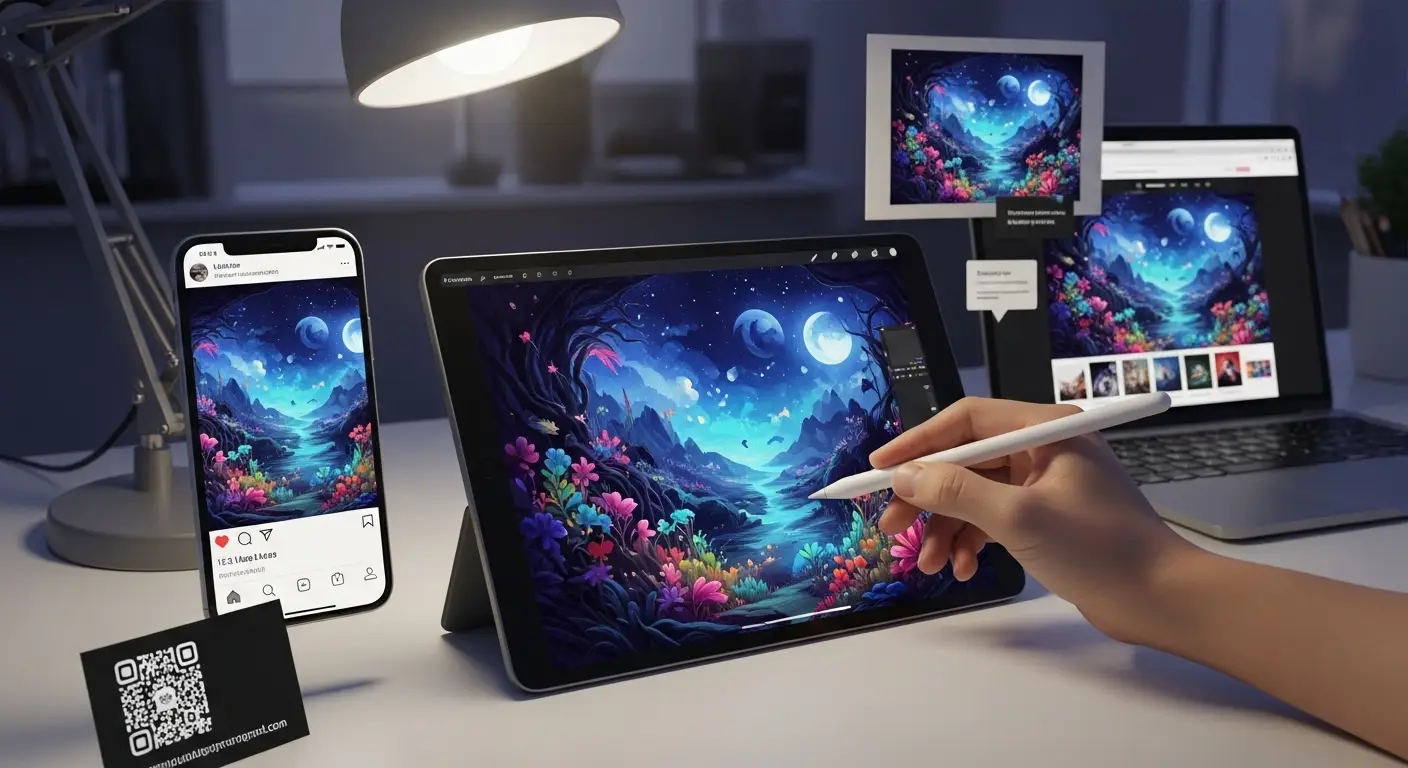
Digital art promotion connects an artist, a digital artwork, and an audience through online distribution channels. Digital artists use platforms such as Instagram, ArtStation, DeviantArt, Behance, and NFT marketplaces to present artwork to collectors, studios, and creative communities. Promotion increases artwork visibility, audience engagement, and sales opportunities.
Digital artwork exists as files such as PNG, JPEG, PSD, or vector formats created with tools like Adobe Photoshop, Procreate, Clip Studio Paint, and Blender. Promotion strategies focus on platform algorithms, audience behaviour, content distribution systems, and online art marketplaces. Effective promotion links artwork presentation, artist branding, and community interaction.
What Are the Most Effective Platforms to Promote Digital Art?
The most effective platforms to promote digital art are Instagram, ArtStation, DeviantArt, Behance, Twitter (X), Pinterest, TikTok, and online art marketplaces such as Etsy and OpenSea.
Digital art promotion relies on platforms that host visual media, support artist portfolios, and distribute content through discovery algorithms. Each platform connects artists with specific audiences such as collectors, design studios, game developers, or art enthusiasts.
1. What Is Instagram and How Does It Promote Digital Art?
Instagram, a visual social media platform owned by Meta Platforms, distributes artwork through feeds, hashtags, and recommendation algorithms. Artists post digital illustrations, concept art, and animation reels.
Instagram uses engagement signals such as likes, comments, saves, and shares to expand content reach. Artists who publish consistent artwork series gain algorithm visibility and attract followers interested in digital illustration.
Example: Digital illustrator Loish built a global audience through consistent artwork posting and engagement with followers.
2. What Is ArtStation and Why Do Professional Artists Use It?
ArtStation is a portfolio platform used by digital artists working in film, video games, and animation industries. Studios such as Ubisoft, Blizzard Entertainment, and Riot Games recruit artists through ArtStation portfolios.
Artists publish concept art, environment design, character models, and 3D renders. ArtStation allows high resolution portfolio presentation and includes job recruitment boards.
Example: Concept artists for video games display environment design projects to attract hiring studios.
3. What Is DeviantArt and How Does It Support Art Communities?
DeviantArt is an online art community founded in 2000 that hosts millions of user submitted artworks. It supports fan art, digital illustration, animation, and experimental digital art.
Artists build communities through comments, collections, and group submissions. DeviantArt also supports print sales and digital downloads through its marketplace.
Example: Digital fantasy artists share character illustrations and receive feedback from community members.
4. What Is Behance and How Does It Help Digital Designers?
Behance is a portfolio platform owned by Adobe Systems. Graphic designers, illustrators, and motion artists publish project case studies.
Artists display project processes including sketches, colour palettes, and final artwork. Creative agencies and companies review Behance portfolios when hiring designers.
Example: UI designers publish digital interface projects demonstrating workflow and design thinking.
5. What Is Pinterest and How Does It Drive Artwork Discovery?
Pinterest is a visual search engine where users save images called pins to thematic boards. The platform indexes artwork using keywords and image recognition.
Digital illustrations and character designs gain traffic through search queries such as fantasy character art or anime illustration.
Example: A fantasy landscape artwork appears in search results for digital environment art.
How Does Social Media Algorithm Visibility Increase Digital Art Reach?
Social media algorithms increase digital art reach by recommending artwork to users based on engagement signals, posting consistency, and content relevance.
Platforms such as Instagram, TikTok, and Pinterest use machine learning systems to analyse viewer behaviour. Algorithms measure engagement metrics including watch time, comments, shares, and saves.
Higher engagement signals indicate content relevance. Platforms respond by distributing artwork to broader audiences through recommendation feeds.
Artists who post regularly and interact with audiences strengthen algorithm visibility. Digital art accounts that maintain consistent themes such as character design or fantasy illustration develop targeted audience segments.
Example: An artist posting weekly character design illustrations gains visibility in character art recommendation feeds.
Source: Meta AI Research
Source: Google Search Algorithm Documentation
Why Is Building an Artist Brand Important for Digital Art Promotion?
Building an artist brand increases recognition, audience loyalty, and trust in digital artwork.
An artist brand represents identity elements such as artistic style, visual themes, colour palettes, and storytelling approach. Branding helps audiences recognise artwork instantly.
Digital artists establish brand identity through consistent visual style and profile presentation. Elements include artist logos, signature colour schemes, and portfolio structure.
Example: Beeple, a digital artist known for 3D political commentary art, developed a recognizable visual style and built a large audience before entering NFT markets.
Brand consistency supports algorithm recognition and audience retention. Followers associate the artist name with a specific art style or theme.
How Does Creating an Online Portfolio Improve Digital Art Visibility?
An online portfolio increases digital art visibility by presenting artwork professionally for collectors, clients, and studios.
A portfolio website acts as a central hub for an artist’s work. Platforms such as ArtStation, Behance, and personal websites built with WordPress or Squarespace organize artworks into categories.
A structured portfolio contains:
• Featured artworks
• Project breakdowns
• Process images
• Artist biography
• Contact information
Professional portfolios highlight technical skills and creative direction. Studios reviewing portfolios evaluate anatomy accuracy, lighting, composition, and storytelling elements.
Example: A game studio reviewing a character artist portfolio examines anatomy structure and costume design.
What Role Do Art Communities Play in Promoting Digital Art?
Art communities promote digital art by enabling feedback, collaboration, and network visibility among artists and audiences.
Communities such as Reddit art forums, Discord artist servers, and DeviantArt groups create interactive spaces where artists share work and receive critique.
Community interaction produces several promotion benefits:
• Artwork exposure to new viewers
• Skill improvement through critique
• Collaboration opportunities
• Networking with professional artists
Example: Concept artists in Discord communities exchange feedback on environment design projects.
Artist communities also support themed events such as drawing challenges. Events generate large amounts of shared artwork and expand visibility through shared hashtags.
Example: Inktober, created by illustrator Jake Parker, encourages daily ink drawing submissions throughout October.
How Do Hashtags Improve Digital Art Discoverability?
Hashtags improve digital art discoverability by categorizing artwork under searchable topics used by social media algorithms.
Hashtags function as indexing tags that connect artwork with viewer interests. Platforms such as Instagram and Twitter classify posts using hashtags.
Digital artists use thematic hashtags describing subject matter, medium, and style.
Examples of digital art hashtags:
• #DigitalArt
• #CharacterDesign
• #ConceptArt
• #AnimeArt
• #FantasyIllustration
Algorithms analyze hashtags to deliver artwork to relevant audiences searching those topics.
Example: An anime character illustration tagged with #AnimeArt appears in anime art discovery feeds.
Source: Instagram Creator Guidelines
How Do Digital Art Marketplaces Generate Sales Opportunities?
Digital art marketplaces generate sales opportunities by connecting artists with buyers searching for digital products and artwork.
Online marketplaces host art listings, payment processing, and customer discovery tools. Platforms attract collectors, hobbyists, and businesses purchasing artwork.
Major digital art marketplaces include:
• Etsy – marketplace for digital downloads and printable artwork
• Gumroad – platform for digital products and tutorials
• ArtStation Marketplace – digital asset store for 3D models and brushes
• OpenSea – marketplace for blockchain based digital art NFTs
Artists list downloadable products such as:
• digital prints
• concept art packs
• Photoshop brushes
• 3D assets
Example: An illustrator sells printable wall art files through Etsy digital download listings.
Marketplaces increase exposure because users search for artwork categories within the platform.
How Does Consistent Content Posting Improve Digital Art Promotion?
Consistent content posting increases audience growth and algorithm distribution of digital artwork.
Posting frequency signals platform algorithms that an account produces active content. Active accounts receive higher distribution priority.
A consistent posting schedule includes:
1 Weekly artwork posts
2 Daily sketch updates
3 Process videos or time lapse art creation clips
Time lapse videos showing drawing processes generate high engagement because viewers observe artwork development.
Example: TikTok art creators post time lapse drawing videos demonstrating illustration techniques.
Source: TikTok Creator Education Program
Why Do Art Tutorials and Process Videos Promote Digital Artists?
Art tutorials and process videos promote digital artists by demonstrating skill, attracting learners, and increasing audience engagement.
Educational content expands audience reach because art students and beginner artists search for learning resources.
Tutorial formats include:
• Speed painting videos
• Layer breakdowns
• Brush technique demonstrations
• Anatomy drawing tutorials
Artists who share educational content gain authority recognition within art communities.
Example: Digital painter Marco Bucci publishes painting technique tutorials that attract both artists and art enthusiasts.
Educational content also increases content share rates. Viewers share tutorials with learning communities.
Source: YouTube Creator Academy
Frequently Asked Questions (FAQs)
What Is Digital Art Promotion?
Digital art promotion is the process of increasing visibility and audience engagement for artwork using online platforms, art marketplaces, and social media networks.
Artists distribute artwork through portfolios, community platforms, and visual media networks.
Why Do Digital Artists Use Instagram?
Digital artists use Instagram because its visual content algorithm distributes artwork to large global audiences through hashtags and recommendation feeds.
Do Professional Studios Review Online Art Portfolios?
Yes, professional studios review online portfolios on platforms such as ArtStation and Behance when recruiting artists for animation, film, and game production.
What Type of Content Attracts the Most Engagement for Digital Artists?
Time lapse drawing videos, character design posts, and artwork breakdowns generate high engagement because audiences observe creative processes.
What Digital Files Do Digital Artists Sell Online?
Digital artists sell PNG illustrations, printable artwork, Photoshop brushes, Procreate brushes, 3D models, and texture assets.
What Is the Role of Art Challenges in Promotion?
Art challenges increase exposure by encouraging artists to publish themed artworks under shared hashtags that appear in trending community feeds.