Mahito in Jujutsu Kaisen: The Curse Born from Human Hatred Explained
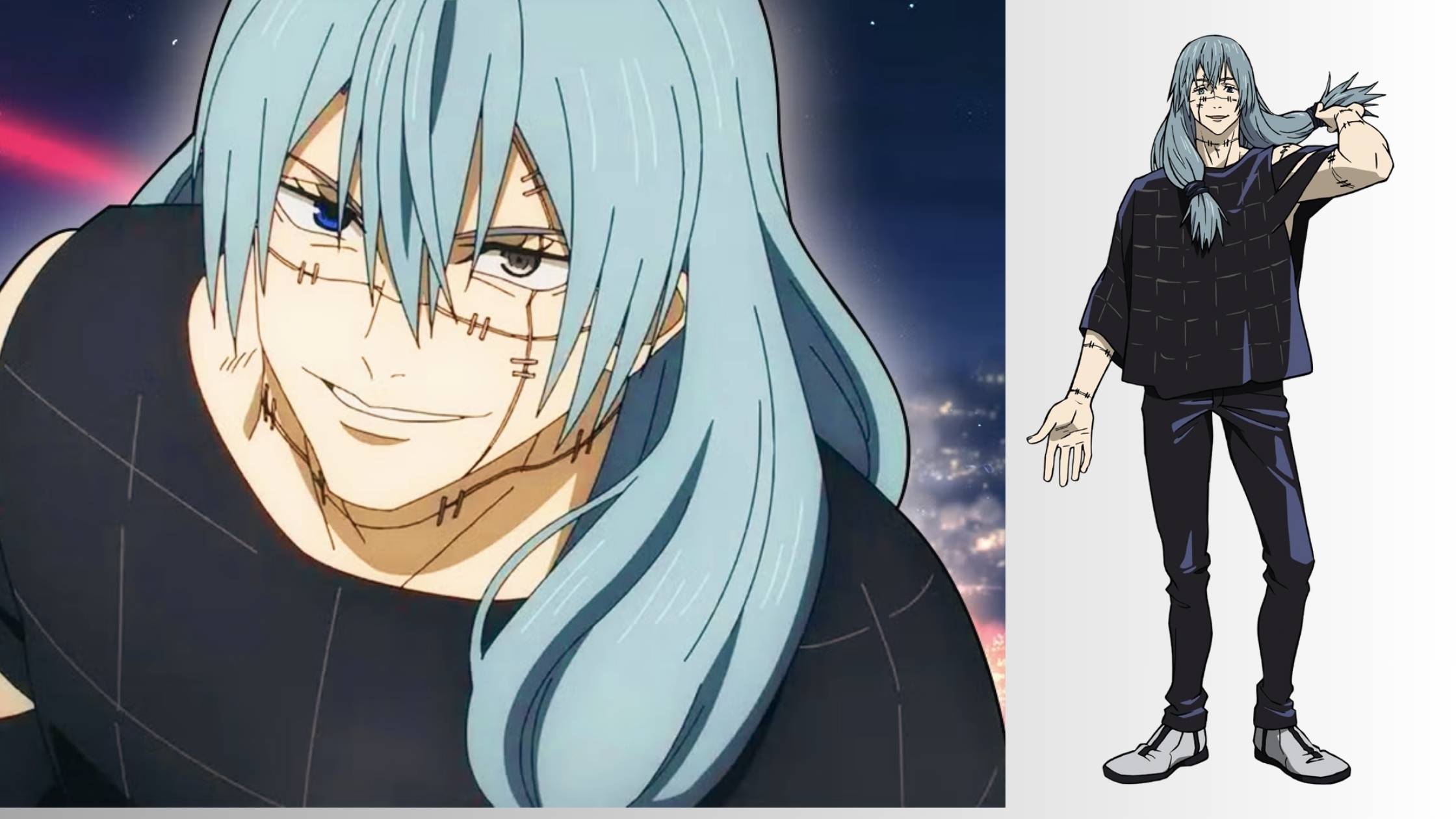
Mahito (真人) is a Special Grade cursed spirit and one of the central antagonists of Jujutsu Kaisen. He is born from humanity’s collective fear and hatred of other humans, wields the Idle Transfiguration technique that allows him to reshape souls directly, and becomes the first enemy Yuji Itadori genuinely hates and actively wants to kill.
His name is written with the kanji meaning “true person.” He is one of the least human entities in the entire series. That is the joke, and nobody is laughing.
Character Profile
| Detail | Information |
|---|---|
| Name | Mahito (真人) |
| Type | Unregistered Special Grade Cursed Spirit |
| Origin | Born from humanity’s fear and hatred of other humans |
| Cursed Technique | Idle Transfiguration |
| Domain Expansion | Self-Embodiment of Perfection |
| Allies | Kenjaku, Jogo, Hanami, Dagon |
| Status | Absorbed by Kenjaku after Shibuya Incident |
| First Appearance | Chapter 14 |
| Height | Approximately 185 cm |
| Voice Actor (JP) | Nobunaga Shimazaki |
| Voice Actor (EN) | Lucien Dodge |
Who Is Mahito?
Mahito is a Special Grade cursed spirit who exists as the physical manifestation of the hatred humans direct at each other and operates as Yuji Itadori’s most personal and devastating enemy across the Vs Mahito Arc and the Shibuya Incident.

Every other major cursed spirit in the disaster curse group represents a specific natural fear: Jogo embodies fear of fire, Hanami embodies fear of death through nature, Dagon embodies fear of the ocean. Mahito is the exception. He embodies the fear and hatred humans aim at each other. That origin makes him qualitatively different from the rest. He is not a natural disaster wearing a face. He is a reflection of what people do to the people around them.
He looks young and almost human, with long grayish-blue hair and a patchwork face covered in stitch-like seams, as if assembled from pieces. He dresses in dark robes. He moves with a casual ease that reads as relaxed until you understand what he is capable of with a single touch.
Gege Akutami described him as an embodiment of “human cruelty personified.” Kohei Horikoshi, the author of My Hero Academia, confirmed Mahito is his favourite character in Jujutsu Kaisen.
What Is Idle Transfiguration?
Idle Transfiguration is Mahito’s innate technique. It allows him to reshape any human soul he touches, altering the body that soul inhabits as a direct consequence. It requires zero cursed energy to use on others, making it economically unbeatable in sustained combat.
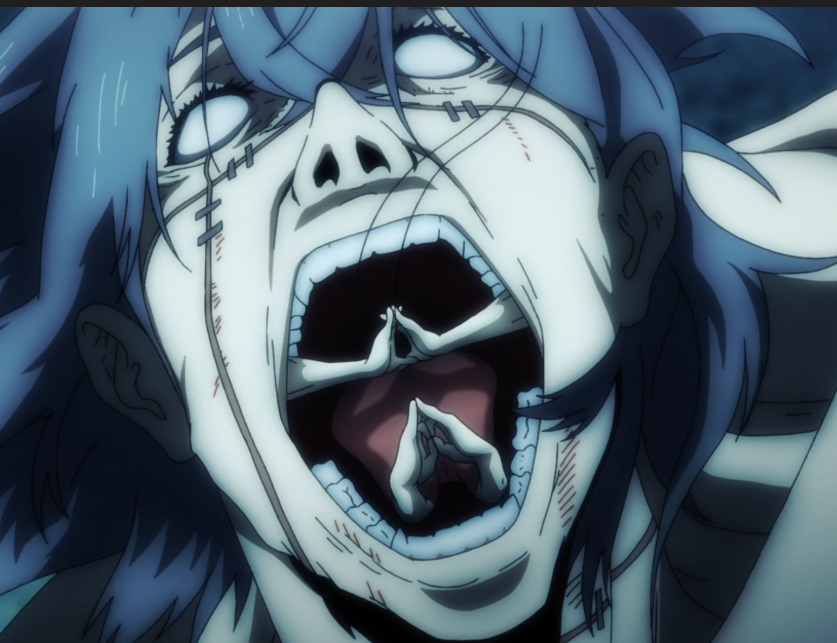
The soul determines the shape of the body in the JJK world. Alter the soul and the body changes with it. Mahito touches a person and reshapes their soul. The results are instant, irreversible, and grotesque. He can kill someone immediately by crushing their soul beyond repair, mutate them into a non-functional transfigured human and leave them alive in a ruined body, or reshape them into a specific monstrous form for use as a weapon.
No external cursed energy cost. No stamina drain. He simply touches and reshapes. This is why Nanami, a seasoned Grade 1 sorcerer, explicitly tells Yuji that fighting Mahito until he runs out of energy is not a realistic strategy.
The technique has several specific properties that make it more dangerous than it initially appears:
On Other People
A single touch to the soul is enough to kill or transform a target who cannot protect their soul with cursed energy. Most humans and many sorcerers cannot actively defend their soul. The moment Mahito makes skin contact, the outcome is almost always fatal. Even partial contact causes progressive damage. After two or three direct soul attacks, even someone protecting themselves with cursed energy will no longer be fully human.
On Himself
Mahito can apply Idle Transfiguration to his own soul and body with effectively no risk and at minimal cost. He transforms his arms into blades, his legs into hooves for speed, his body into a fish for water traversal, creates wings for flight, enlarges his form, splits himself into clones, and repairs injuries by reshaping the damaged portions of his soul back into their correct configuration. His shapeshifting is limited only by his imagination and his understanding of his own soul’s structure.
Reading Souls
Idle Transfiguration gives Mahito heightened awareness of the souls of others. He can read their emotional state through how their soul reacts. When Nanami insists he is not disturbed by the transfigured humans who retain consciousness, Mahito tells him he is lying because his soul is trembling. He cannot be deceived by composed faces when souls respond honestly.
The Exception: Yuji Itadori
Idle Transfiguration cannot select which soul to target when multiple souls occupy the same body. Touching Yuji means risking contact with Sukuna’s soul simultaneously. Sukuna responds to this with immediate and overwhelming anger directed at Mahito.
This constraint forces Mahito to fight Yuji differently from every other opponent, relying on physical shapeshifting and transfigured human weapons rather than his primary technique. This is also why Mahito designates Yuji as his natural enemy: the person he most wants to destroy is the person he cannot directly touch with his best ability.
The Other Natural Enemy: Nobara
Mahito designates Nobara Kugisaki as his second natural enemy after she uses Resonance on his body during Shibuya. Resonance attacks the soul directly and at range, bypassing the requirement for physical contact. Mahito cannot stop it by keeping distance. The two techniques that threaten him most are both soul-based, which is the specific irony of a creature who thought soul manipulation was his exclusive domain.
Polymorphic Applications
Beyond the core technique, Mahito develops several advanced applications. Polymorphic Soul Fusion forcibly fuses multiple souls together, generating massive cursed energy from the rejection reaction between them. Body Repulsion releases that fused energy in a single blast. Polymorphic Soul Isomer creates transfigured humans with weakly fused souls that burn out instantly for explosive suicidal attacks.
Domain Expansion: Self-Embodiment of Perfection

Mahito’s Domain Expansion creates a vast black space where Idle Transfiguration activates automatically against anyone inside without requiring physical contact. Every soul inside is at his mercy instantly. He develops this domain mid-battle with Nanami and Yuji when near death, using it as a decisive power surge. After observing Gojo activate Unlimited Void during the Shibuya Incident, Mahito learns to open his domain in 0.2-second intervals, directly replicating Gojo’s technique for rapid domain usage in combat.
What Is Mahito’s Personality?
Mahito is playful, curious, and genuinely fascinated by human suffering, not from cruelty as a goal but from philosophical detachment that makes cruelty effortless.
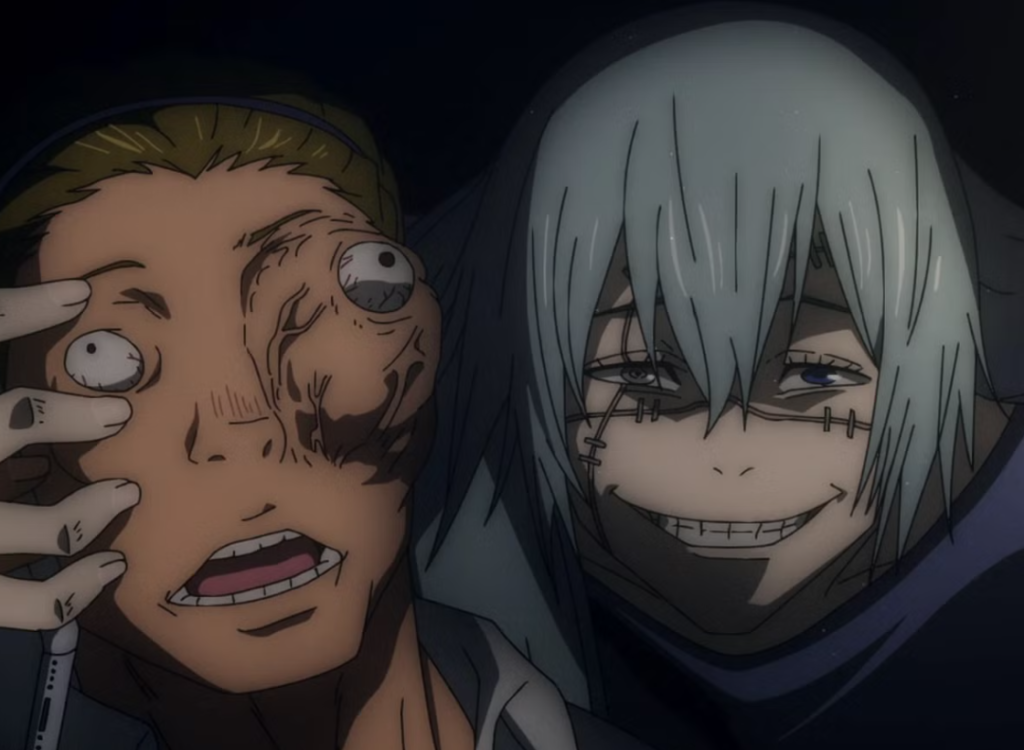
He does not hate humans the way a person with a grudge hates. He does not hate them at all. He finds them interesting in the way a child finds insects interesting before pulling off their legs. His philosophy is that life has no inherent value, souls are byproducts of metabolism, and humans are merely vessels for containing those souls. From this position, reshaping and destroying those vessels is not cruel. It is simply what he does.
This is what makes him more disturbing than straightforward villains. He is not performing cruelty. He is genuinely unconcerned. He groomed Junpei Yoshino over weeks with apparent warmth and care, and then used him as a tool the moment it was convenient, with no internal conflict whatsoever. He was never pretending to care. He simply never cared at all.
His relationship with Yuji is the exception that defines his character. Yuji is the one person he cannot touch directly, the one person who genuinely wants to kill him, and the person whose growth mirrors his own across the arcs. Every time they fight Mahito is stronger. So is Yuji. They evolve in opposition, which is as close to genuine engagement as Mahito is capable of.
What Happens to Mahito in the Story?
Mahito grooms and kills Junpei during the Vs Mahito Arc, escalates through Shibuya killing Nanami and critically injuring Nobara, is beaten into near-death by Yuji, and is then absorbed by Kenjaku.

Vs Mahito Arc
Mahito’s first extended appearance involves his grooming of Junpei Yoshino. He befriends Junpei, teaches him about curses, presents himself as the only person who understands him, and uses him as a test subject and eventually a weapon. When Yuji begins to reach Junpei and pull him away from Mahito’s influence, Mahito transfigures Junpei directly in front of him. Junpei dies in Yuji’s arms. Sukuna refuses to help. The loss is the first thing in the series that breaks something in Yuji permanently.
Mahito fights Nanami and Yuji separately and together across this arc, developing his technique through each encounter. He is not yet fully formed at this point but he is already growing faster than his opponents can track.
Read from Chapter 19 through Chapter 29.
Shibuya Incident
Mahito’s role in the Shibuya Incident is catastrophic. He kills Nanami while Yuji watches, unable to stop it. He uses transfigured humans en masse. He fights Nobara and activates Idle Transfiguration on her face, destroying her left eye and leaving her between life and death. He activates his Domain Expansion. He fights Yuji at full power across multiple exchanges.
Yuji lands a full-power Black Flash on Mahito’s true form, exhausting him to the point of near-death. Mahito flees. Kenjaku appears. Rather than letting Mahito survive, Kenjaku absorbs him entirely, incorporating Idle Transfiguration into his own technique set.
The curse born from human hatred is ultimately swallowed by a human sorcerer who has been alive for over a thousand years. His contempt for humanity produces his ending: being weaponised by exactly the kind of person he thought he was superior to.
Afterlife
Idle Transfiguration allows Mahito to remain in the pathway of souls after death rather than reincarnating. He meets Sukuna there and criticises the King of Curses for choosing to go north and try a different life. Sixty-eight years later he is still in that realm, refusing to move on, waiting to taunt Yuji when the sorcerer eventually dies. His obsession with Yuji outlasts his body and his freedom. The curse who claimed nothing had value cannot let go of the one enemy who mattered to him.
What Does Mahito Represent?
Mahito is the manga’s most direct question about where evil comes from. His answer is that it comes from inside humanity, not from outside it. He exists because people hate each other. He is what that hatred produces when it accumulates beyond a certain point.
His fights with Yuji are the series’ clearest exploration of why death is central to Jujutsu Kaisen. Every person Mahito kills matters. Junpei’s death is not a plot device. Nanami’s death is not a plot device. They are the cost of what Mahito represents, and the manga makes Yuji carry every one of them.