Fumihiko Takaba in Jujutsu Kaisen: The Comedian Who Nearly Broke a Thousand-Year-Old Genius
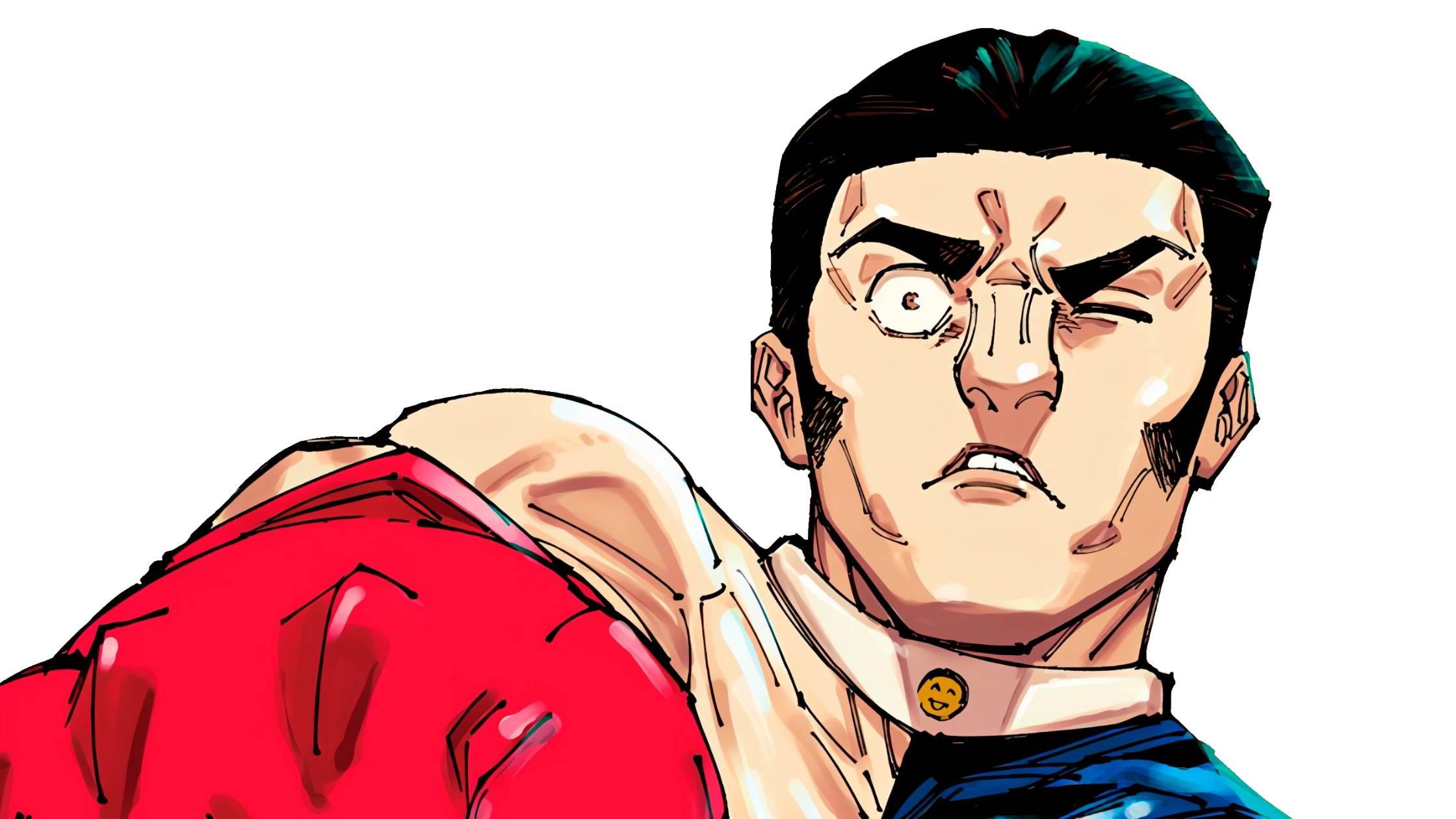
Fumihiko Takaba (高羽史彦) spent 35 years trying to make people laugh professionally. He never cracked it. His comedy duo fell apart because his partner did not take comedy seriously enough. He kept going anyway, performing to audiences who did not find him funny, carrying a belief that laughter matters more than any outcome he could point to.
Then Kenjaku rewired his brain and dropped him into a death tournament.
Takaba is not a joke character. Takaba is the manga’s argument that genuine joy — unperformed, unconditional, completely sincere — is one of the most disruptive forces in a world built entirely on calculated suffering.
Character Profile
| Detail | Information |
| Full Name | Fumihiko Takaba (高羽史彦) |
| Age | 35 |
| Former Occupation | Stand-up comedian |
| Affiliation | Independent — Culling Game participant |
| Status | Alive |
| Cursed Technique | Comedian |
| First Appearance | Chapter 146 |
| Arcs | Perfect Preparation, Culling Game, Shinjuku Showdown |
| Voice Actors | Satoshi Tsuruoka (JP), Scott Whyte (EN) |
Who Is Fumihiko Takaba?
Fumihiko Takaba is a failed comedian turned Culling Game sorcerer — the only participant who entered a death tournament with no intention of killing anyone and still ended up fighting Kenjaku to a standstill.
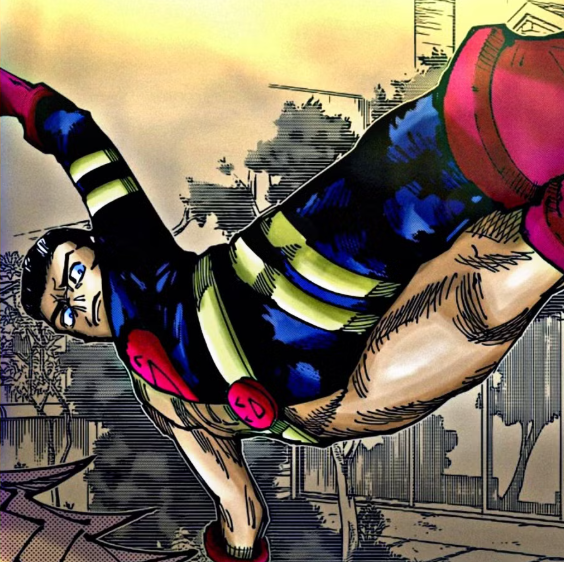
Kenjaku awakened Takaba’s cursed technique through Idle Transfiguration, the same mass-awakening process applied to hundreds of civilians across Japan. Most of those people entered the Culling Game terrified. Takaba entered it in a superhero costume.
The costume is specific: it is the first superhero character that ever made him laugh hysterically as a child. He carries that into the game with him. Not as armour. As a statement.
What Does Takaba Look Like?
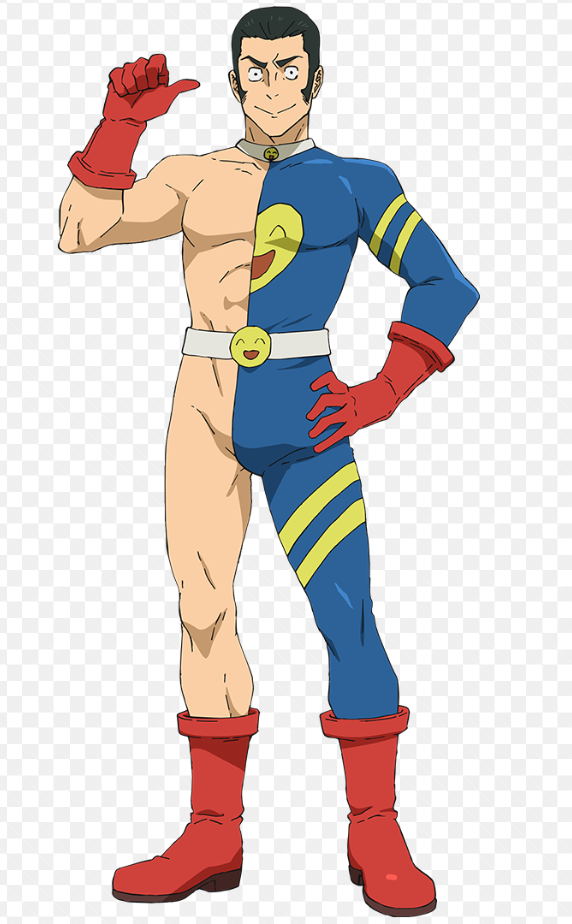
| Feature | Detail |
| Build | Tall, adult male |
| Hair | Short, slicked back, dark |
| Sideburns | Long, tapering past his nose |
| Eyebrows | Thick |
| Pre-game attire | Business suit, checkered tie |
| Culling Game costume | Split skin-tight suit — left side light blue with yellow stripes, right side missing entirely, bare chest and leg exposed |
The right side of his costume being missing is not an oversight. The circular text bubble covering the exposed area reads “curse.” Takaba designed this himself and considers it a strong choice.
What Is Takaba’s Personality?
Takaba is not performing cheerfulness — he genuinely finds things funny in situations where every other character is terrified, and that gap between his register and reality is both the joke and the point.
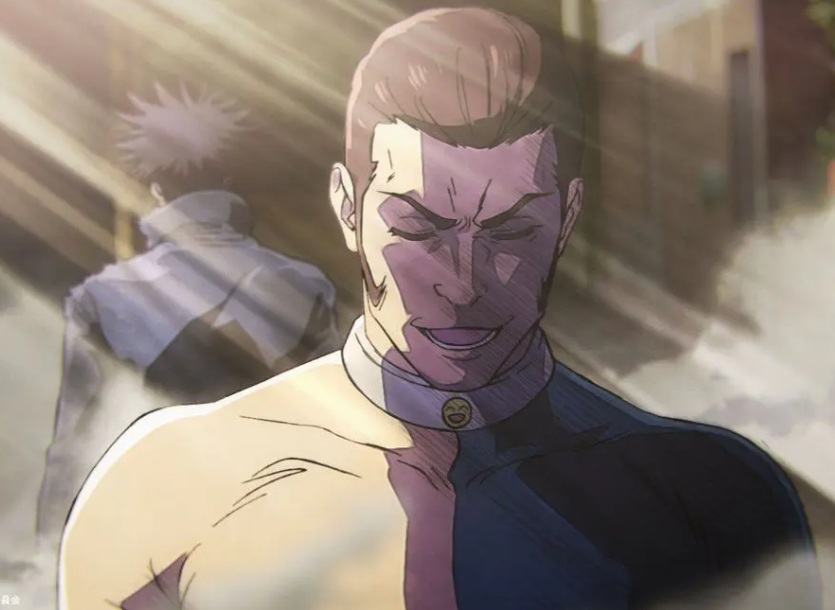
As a lonely child, he discovered that making people laugh was the fastest path to connection. That discovery became a philosophy. Laughter is not something Takaba uses — it is what he believes in, the same way other characters believe in duty or strength or survival.
He refuses to kill anyone in the Culling Game. This is not a strategic choice or a code of honour. Takaba simply does not want to kill people. In a tournament where the rules literally require accumulating points through killing, Takaba opts out of that part and keeps going anyway.
The other sorcerers cannot take him seriously. That is also the point.
What Is Takaba’s Cursed Technique?
Takaba’s innate technique is Comedian — it manifests whatever he genuinely believes will be funny into reality, granting him reality-warping capability that Kenjaku describes as potentially negating a thousand years of accumulated jujutsu knowledge.
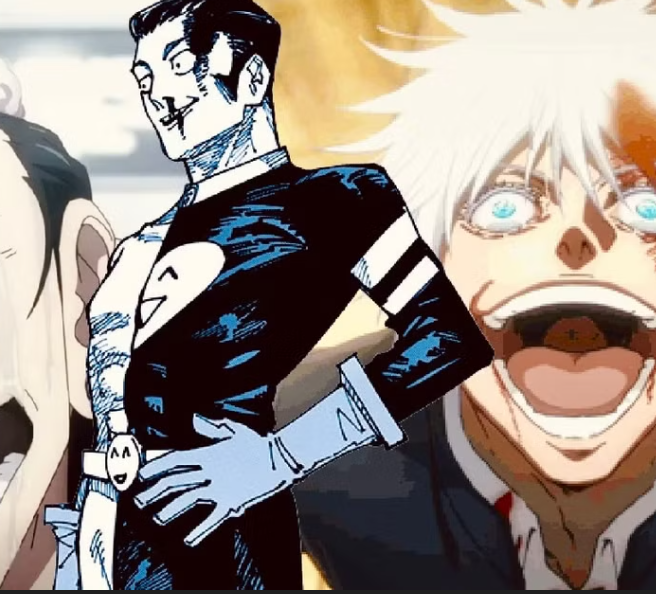
The key word is genuinely. Comedian does not respond to performed confidence or strategic thinking. Takaba has to actually find something funny — sincerely, without calculation — for the technique to activate. The moment doubt enters, the technique stops. Kenjaku identifies this and exploits it.
In practice, Comedian operates on several levels:
- Reality conjuring — Takaba creates physical objects, substances, and environments from nothing if the scenario is funny enough. During his fight with Hazenoki, he coats himself in ankake sauce so punches slide off. The sauce is real. It works.
- Damage nullification — Attacks that should kill him fail to register as damage because the outcome is not funny. Hazenoki notes with mounting frustration that Takaba should have died at least five times by that point.
- Healing — Takaba recovers from injuries without Reverse Cursed Technique. The technique simply decides he is fine because dying here would not be a good bit.
- Soul resonance — Comedian reads the opponent’s thoughts and feelings and pulls them into scenarios they cannot logically resist. Against Kenjaku, Takaba drags an ancient sorcerer into game shows, beach fights, and absurdist performances. Kenjaku is annoyed. Kenjaku still participates. The technique does not ask permission.
- Exorcism through comedy — Takaba runs over a Special Grade cursed spirit with a truck. The truck is real. The exorcism counts.
Gege Akutami has stated that Comedian’s theoretical ceiling rivals Gojo’s Infinity — but confirmed that Takaba himself is the limiting factor, because he has no idea how the technique works and approaches every situation as a comedy performance rather than a power system.
That unawareness is both the technique’s greatest strength and its only real weakness. Takaba cannot overthink something he does not understand. He cannot be psychologically outmanoeuvred on a technical level. He can only be destabilised emotionally — which is exactly what Kenjaku attempts.
What Happens to Takaba in the Story?
Takaba enters the Culling Game as a late-arriving wildcard, gradually becomes indispensable to the surviving sorcerers’ strategy, and fights Kenjaku in one of the manga’s most structurally unusual battles.
Culling Game — Chapter 146 onwards
Takaba’s introduction is him interrupting Megumi’s fight against Reggie Star and Hazenoki mid-crisis. Nobody asked him to show up. He shows up anyway.
His fight with Hazenoki becomes a showcase for how Comedian works before anyone has named it. Hazenoki’s explosions do nothing. Ankake sauce neutralises punches. A dropkick sends Hazenoki through several buildings. Hazenoki eventually gives up — not because he loses technically, but because the fight stops making sense to him and he decides it is not worth continuing. Takaba considers this a win.
Read the sequence from Chapter 162 onwards.
The Fight with Kenjaku
The Angel recommends Takaba specifically for the Kenjaku assignment. Not because he is the strongest available option. Because his technique is the one thing Kenjaku cannot strategise around.
Kenjaku has spent a thousand years accumulating jujutsu knowledge. Comedian does not care about jujutsu knowledge. Kenjaku can identify what is happening, understand the mechanics, and correctly map the weakness — and Takaba still overwhelms him in scenario after scenario because Takaba’s confidence is genuine and Kenjaku’s participation is compelled.
The fight is structured like a comedy show. Kenjaku is forced into the role of straight man. An ancient sorcerer who has hijacked bodies across centuries, engineered the Culling Game, and killed Yuki Tsukumo finds himself standing in front of a crowd holding a microphone.
Kenjaku does eventually break through — by criticising Takaba’s jokes directly and making him doubt himself. The technique deactivates. Kenjaku lands real damage. Takaba takes a genuine hit for the first time.
Then Takaba remembers why he started doing comedy in the first place — the lonely kid who found that laughter made people come to him. He remembers it fully. The technique comes back at greater strength than before.
Kenjaku admits that if he had not been careful, everything he knows would have been useless. From Kenjaku, that is not understatement.
What Does Takaba Represent in the Story?
Takaba is the manga’s counterargument to the idea that the Culling Game’s logic — that strength and calculation determine who survives — is actually complete.
Every serious player in the Culling Game is working angles. Kashimo is searching for Sukuna. Hakari is accumulating points. Reggie is building alliances. Everyone has a strategy.
Takaba does not have a strategy. Takaba wants people to laugh.
The fact that this approach gets him through Hazenoki, through Kenjaku, and out the other side alive — while refusing to kill anyone — is the manga making a point about what actually persists in a world designed to extract suffering. Kenjaku built the Culling Game on the premise that human negativity and conflict are the fundamental forces driving everything. Takaba is the rebuttal.
He is also the only character in the manga who fights Kenjaku and walks away. That is worth noting.
For context on the Culling Game arc and how Takaba fits into its broader cast, read the full chapter sequence at jujutsukaisenmanga.pro.