How to Self Publish Manga and Make Money

Self publishing manga allows creators to produce, distribute, and monetize their own comic work without relying on traditional publishing companies. Independent manga artists control story development, artwork, pricing, and distribution channels. Digital publishing platforms, print on demand services, and creator marketplaces support global distribution.
The global manga market continues expanding due to digital platforms such as Amazon Kindle Direct Publishing, Webtoon, and Tapas. Independent creators generate income through direct sales, subscriptions, merchandise, and advertising. Understanding the complete process of manga production, publishing, marketing, and monetization allows artists to build sustainable income from their work.
What does self publishing manga mean?
Self publishing manga means producing, distributing, and selling manga without a traditional publishing company.
Traditional manga publishers such as Shueisha, Kodansha, and Shogakukan select a limited number of creators through editorial review and magazine serialization. Self publishing removes this gatekeeping system. Independent creators manage writing, illustration, editing, printing, and sales independently.
Digital technology expanded the self publishing ecosystem. Platforms such as Amazon Kindle Direct Publishing (KDP), Webtoon Canvas, Tapas, and Gumroad allow manga creators to upload content and reach global readers.
Self publishing places full control in the hands of the creator. The artist manages story development, character design, artwork production, distribution platforms, pricing models, and marketing campaigns.
Successful independent manga creators frequently combine digital releases with physical book sales. Comic conventions, online marketplaces, and creator subscription platforms such as Patreon provide additional revenue channels.
Why does self publishing manga generate income?
Self publishing manga generates income through digital sales, print sales, licensing, merchandise, and fan supported platforms.
The manga industry generates billions in annual revenue worldwide. Digital publishing platforms reduce entry barriers for independent creators. Artists retain ownership of intellectual property and receive higher royalty percentages compared to traditional publishing contracts.
Independent manga creators generate income through several monetization channels.
What are digital manga sales?
Digital manga sales occur when readers purchase downloadable manga volumes or chapters.
Platforms such as Amazon Kindle, Google Play Books, Apple Books, and Gumroad distribute digital manga worldwide. Creators upload PDF or EPUB formatted manga books and set retail prices.
Amazon Kindle Direct Publishing pays up to 70 percent royalties depending on pricing and distribution region.
What are print manga sales?
Print manga sales occur through physical books.
Print on demand companies such as Amazon KDP Print, IngramSpark, and Lulu produce manga books after customer orders. This system eliminates inventory costs because books print only when purchased.
Independent artists also sell printed manga at comic conventions and artist marketplaces.
What are subscription based manga platforms?
Subscription platforms provide recurring income.
Creators upload exclusive chapters, sketches, and behind the scenes content to platforms such as Patreon and Ko fi. Fans subscribe monthly to support the artist and receive early access to chapters.
What are merchandise sales for manga creators?
Merchandise generates additional revenue.
Popular manga series expand into products such as:
• Posters
• Character stickers
• Art prints
• Clothing
• Keychains
• Figurines
Independent creators sell merchandise through Etsy, Shopify, and convention booths.
What are the steps to self publish manga and make money?
Self publishing manga requires a structured process involving story development, artwork production, formatting, publishing, marketing, and monetization.
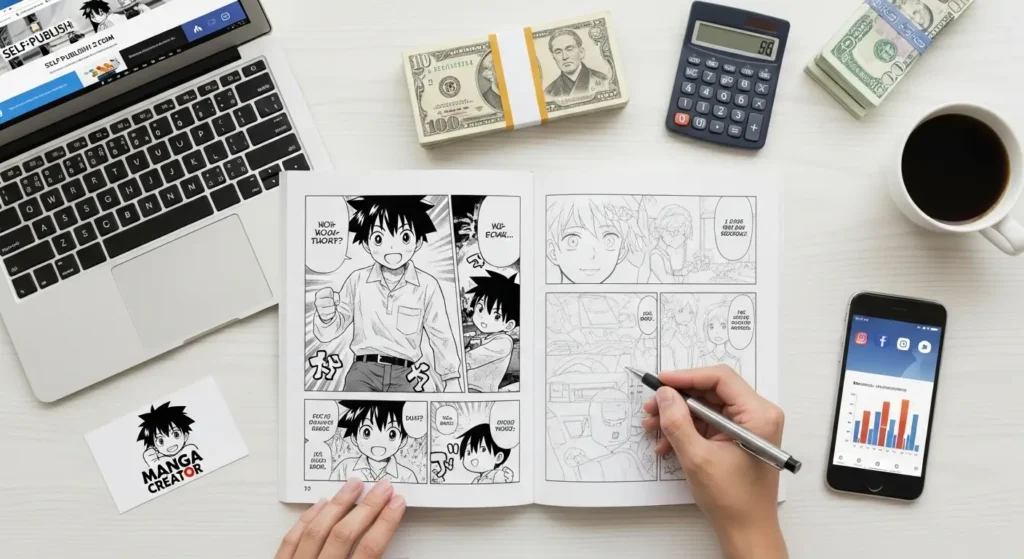
Following a structured workflow improves quality and commercial success.
Step 1: How do you create a manga story and concept?
Creating a manga story involves developing characters, plot structure, and world building.
Successful manga begins with strong narrative structure.
Manga storytelling uses narrative frameworks similar to screenwriting. The three act structure organizes the story into setup, conflict escalation, and resolution.
Key story components include:
• Main protagonist
• Supporting characters
• Antagonist
• Setting or world design
• Conflict and stakes
Famous manga such as One Piece by Eiichiro Oda and Naruto by Masashi Kishimoto follow long running narrative arcs that maintain reader engagement.
Storyboarding converts the written concept into visual panel sequences.
Step 2: How do you design manga characters?
Character design defines the visual identity and personality traits of manga characters.
Character design includes appearance, clothing, expressions, and unique features.
Professional manga artists use character sheets to maintain visual consistency. Character sheets include front views, side views, facial expressions, and costume variations.
Strong character design increases reader attachment and improves merchandising potential.
Step 3: How do you draw manga pages?
Drawing manga pages requires panel composition, line art, inking, and tone shading.
Manga pages follow structured panel layouts that guide reader eye movement from right to left.
The manga production process includes:
1 Sketching rough page layouts
2 Drawing detailed pencil lines
3 Inking the final artwork
4 Adding screentone shading
5 Placing dialogue and sound effects
Professional tools include Clip Studio Paint, Adobe Photoshop, and Procreate. Clip Studio Paint remains the most widely used software among manga artists due to its screentone library and panel layout features.
Step 4: How do you format manga for publishing?
Manga formatting prepares artwork files for digital and print distribution.
Digital manga platforms accept specific file formats and page dimensions.
Standard manga page size includes:
• B5 format: 176 × 250 mm (6.9 × 9.8 inches)
• A5 format: 148 × 210 mm (5.8 × 8.3 inches)
File preparation includes:
• 300 DPI resolution for print quality
• Grayscale artwork format
• PDF or EPUB file conversion
Formatting errors lead to rejection during publishing platform review.
Step 5: How do you choose a manga publishing platform?
Choosing a publishing platform determines distribution reach and royalty structure.
Different platforms specialize in different manga formats.
The following platforms support independent manga creators.
| Platform | Distribution Type | Monetization Model |
| Amazon Kindle Direct Publishing | Digital and Print | Royalty sales |
| Webtoon Canvas | Vertical scroll comics | Ad revenue and creator funds |
| Tapas | Digital comics platform | Ad revenue and tipping |
| Gumroad | Creator marketplace | Direct digital sales |
| Patreon | Subscription platform | Monthly fan support |
Amazon KDP provides the strongest infrastructure for selling full manga volumes globally.
Step 6: How do you publish manga online?
Publishing manga online involves uploading formatted files to digital distribution platforms.
The publishing process follows structured steps.
1 Create an account on the publishing platform
2 Upload manga manuscript files
3 Add book title and description
4 Set pricing and royalty options
5 Publish the manga listing
Amazon Kindle Direct Publishing reviews submissions before approval. The review process usually completes within 72 hours.
Step 7: How do you market self published manga?
Marketing manga increases visibility, audience growth, and sales performance.
Marketing channels include social media platforms, creator communities, and convention events.
Manga creators use platforms such as:
• Twitter
• Instagram
• TikTok
• YouTube
• Reddit manga communities
Artists post preview panels, character sketches, and behind the scenes production content. This strategy builds audience interest before release.
Comic conventions such as Anime Expo, Comic Con, and Japan Expo allow creators to sell manga directly to readers.
Step 8: How do you monetize manga through multiple income streams?
Monetization strategies combine book sales, fan subscriptions, merchandise, and licensing.
Multiple income streams stabilize creator income.
Common monetization channels include:
• Digital manga sales
• Print manga sales
• Patreon fan subscriptions
• Merchandise products
• Commission artwork
• Licensing rights for animation or games
Successful creators frequently convert manga intellectual property into multimedia franchises.
Step 9: How do you build an audience for your manga?
Building an audience requires consistent content publishing, community engagement, and platform visibility.
Audience growth directly influences manga sales and long term creator income. Manga readers follow creators whose content appears regularly and interacts with fan communities.
Digital platforms such as Webtoon Canvas, Tapas, Twitter, and Instagram function as discovery engines for manga creators. These platforms recommend content to readers through algorithm based feeds.
Audience building focuses on three key strategies.
What is consistent chapter publishing?
Consistent publishing maintains reader engagement and platform visibility.
Manga readers expect regular chapter releases. Weekly or bi weekly schedules keep audiences connected to the story. Webtoon Canvas and Tapas reward consistent publishing with higher algorithm exposure.
Consistent publishing improves reader retention. Long gaps between chapters reduce audience interest.
What is community engagement for manga creators?
Community engagement strengthens reader loyalty and increases fan support.
Creators communicate with readers through comments, livestream drawing sessions, and social media discussions. Platforms such as Discord and Reddit host active manga communities where artists interact with fans.
Fan interaction increases emotional connection with characters and storylines. This relationship increases merchandise purchases and subscription support.
What is cross platform content promotion?
Cross platform promotion expands audience reach across multiple digital ecosystems.
Creators distribute promotional content across multiple platforms. A single manga series appears as preview panels on Instagram, animated clips on TikTok, and chapter announcements on Twitter.
Cross platform promotion exposes the manga to readers who use different platforms. This strategy increases overall traffic toward the main publishing platform.
Step 10: How do you sell printed manga copies?
Selling printed manga copies generates additional revenue through physical book sales.
Physical manga books remain popular among collectors and comic readers. Print on demand technology allows independent creators to sell books without storing inventory.
Print distribution uses several systems.
What is print on demand manga publishing?
Print on demand produces manga books after a customer places an order.
Amazon KDP Print, IngramSpark, and Lulu manufacture books only when purchased. This system eliminates upfront printing costs.
The creator uploads formatted print files. The platform prints the book, ships it to the buyer, and transfers royalties to the creator.
What are comic convention manga sales?
Comic conventions allow creators to sell manga directly to readers.
Events such as Comic Con, Anime Expo, and Japan Expo gather thousands of manga fans. Independent artists sell printed manga volumes at artist alley booths.
Direct sales generate higher profit margins because creators avoid marketplace commission fees.
What are online stores for manga creators?
Online creator stores sell printed books and merchandise directly to fans.
Creators open stores on platforms such as Shopify, Etsy, and Big Cartel. These stores sell manga books alongside merchandise such as posters and character stickers.
Online stores provide full control over pricing and product bundles.
Step 11: How do you price your self published manga?
Pricing manga requires balancing production cost, market expectations, and perceived value.
Manga pricing depends on page count, artwork quality, and format.
Typical pricing ranges include:
• Digital manga chapter: $1 to $3
• Digital manga volume: $4 to $10
• Printed manga volume: $12 to $20
Professional manga volumes published by companies such as Shueisha and Viz Media typically contain 180 to 220 pages. Independent creators often release shorter volumes between 60 and 120 pages to reduce production time.
Competitive pricing attracts first time readers while maintaining sustainable revenue.
Step 12: How do you protect your manga copyright?
Copyright protection secures ownership of manga artwork and story content.
Copyright automatically applies when the creator produces original work. Intellectual property law protects visual art, character designs, and narrative content.
Creators strengthen legal protection through official copyright registration.
What is copyright registration for manga?
Copyright registration records ownership of creative work within a national intellectual property system.
Countries maintain copyright offices such as the United States Copyright Office and the Japan Agency for Cultural Affairs. Registration creates legal documentation of ownership.
Registered copyright improves legal enforcement against plagiarism and unauthorized reproduction.
What is digital watermark protection?
Digital watermarking embeds hidden identifiers within artwork files.
Watermarks identify the creator and discourage unauthorized distribution. Manga creators frequently watermark preview pages shared on social media.
What is licensing for manga intellectual property?
Licensing allows other companies to use manga characters or stories under legal agreement.
Licensing agreements generate additional revenue streams. Manga intellectual property expands into animation, games, merchandise, and publishing collaborations.
Successful manga franchises such as Attack on Titan and Demon Slayer expanded through licensing partnerships across entertainment industries.
Frequently Asked Questions (FAQs)
How long does it take to create a manga chapter?
Creating a manga chapter requires between 20 and 60 hours depending on artwork complexity and page count.
Professional manga artists producing weekly serialized chapters follow strict production schedules. Independent creators usually work at slower schedules to maintain quality.
How many pages should a manga volume contain?
A standard manga volume contains between 150 and 220 pages.
Independent creators frequently release shorter volumes between 60 and 120 pages during early publication stages to accelerate production speed.
Do self published manga creators earn royalties?
Yes, self published manga creators earn royalties from digital platforms and print sales.
Amazon Kindle Direct Publishing pays up to 70 percent royalties depending on pricing and region distribution.
Which software is used to draw manga professionally?
Clip Studio Paint is the primary software used by professional manga artists.
Clip Studio Paint includes panel layout tools, screentone libraries, and perspective rulers designed for comic creation.
Do manga creators keep ownership of their work when self publishing?
Yes, self publishing allows creators to retain full intellectual property ownership.
Traditional publishing contracts often transfer partial rights to publishing companies. Self publishing preserves full creator ownership.
Is digital manga publishing growing worldwide?
Yes, digital manga publishing continues expanding due to smartphone reading platforms.
Digital platforms such as Webtoon, Tapas, and Kindle distribute manga to global audiences. Mobile reading technology increased accessibility for comic readers worldwide.
Can independent manga become successful franchises?
Yes, independent manga frequently evolve into major franchises when audience demand increases.
Webtoon series such as Tower of God and Solo Leveling began as independent digital comics and later expanded into animation and global media distribution.