Ryomen Sukuna in Jujutsu Kaisen: The King of Curses Explained
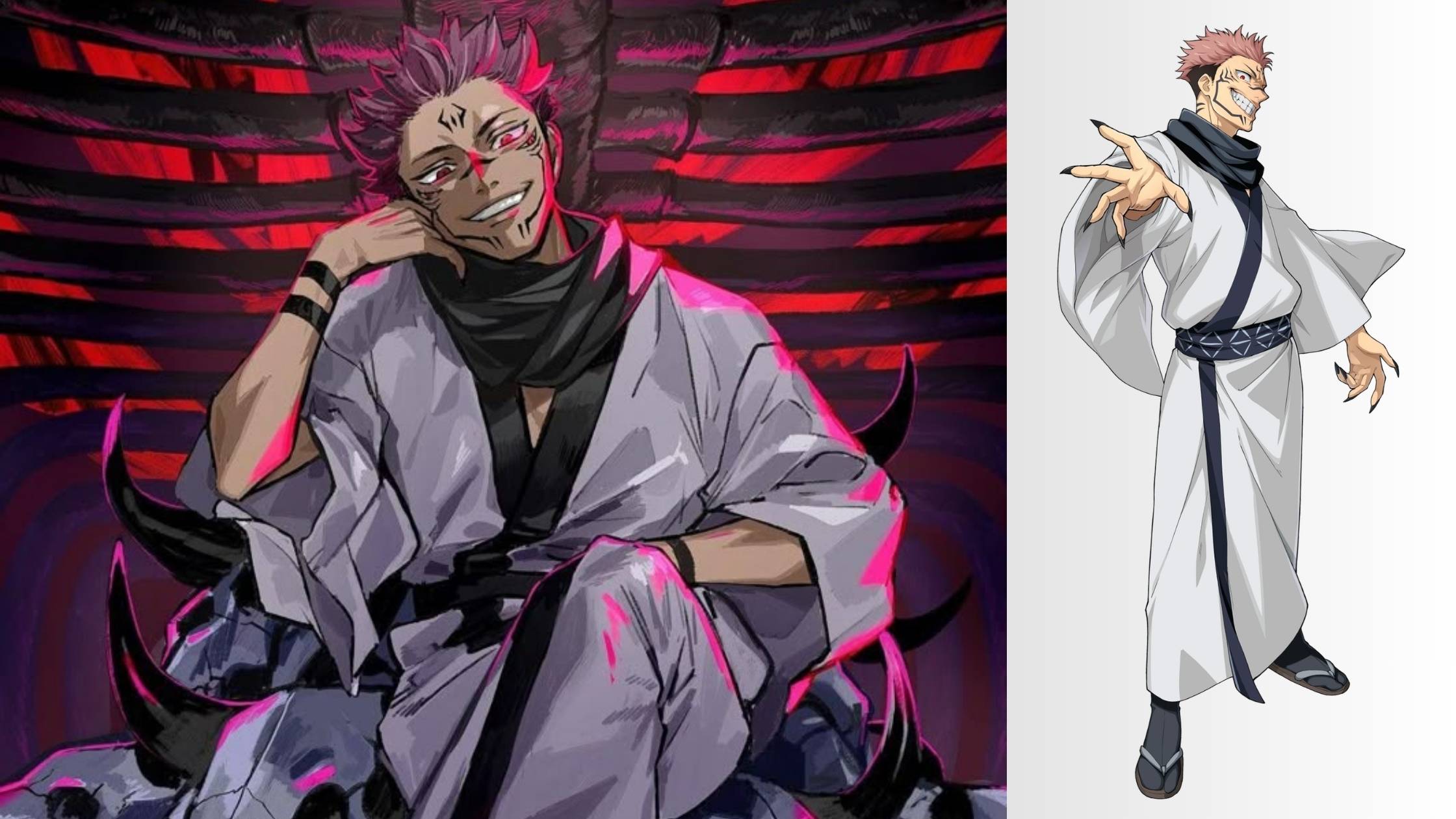
Ryomen Sukuna (両面宿儺) is the primary antagonist of Jujutsu Kaisen. He is the strongest sorcerer in history, a human who lived during Japan’s Heian Era over a thousand years ago and was so powerful that the combined effort of every jujutsu sorcerer of his time could kill him but not destroy him entirely.
His soul survived death inside twenty indestructible cursed fingers scattered across the centuries. One of those fingers ends up in Yuji Itadori’s hands at the start of Chapter 1, and that is where everything begins.
Gege Akutami described Sukuna as “less of a sorcerer and more of a walking disaster.” That description holds for the entire manga.
Character Profile
| Detail | Information |
|---|---|
| Full Name | Ryomen Sukuna (両面宿儺) |
| Title | King of Curses |
| Era | Heian Period (over 1,000 years ago) |
| True Form | Four arms, two faces |
| Vessels | Yuji Itadori (Chapters 1–212), Megumi Fushiguro (Chapter 212–268) |
| Cursed Technique | Shrine (Dismantle, Cleave, Divine Flame) |
| Domain Expansion | Malevolent Shrine |
| Status | Defeated — Chapter 268 |
| First Appearance | Chapter 1 |
| Voice Actor (JP) | Jun’ichi Suwabe |
| Voice Actor (EN) | Ray Chase |
Who Is Ryomen Sukuna?
Ryomen Sukuna is the strongest jujutsu sorcerer in history and the King of Curses. He lived during Japan’s Heian Era, annihilated thousands of sorcerers at the height of the golden age of jujutsu, and was so powerful that death itself could not fully contain him.
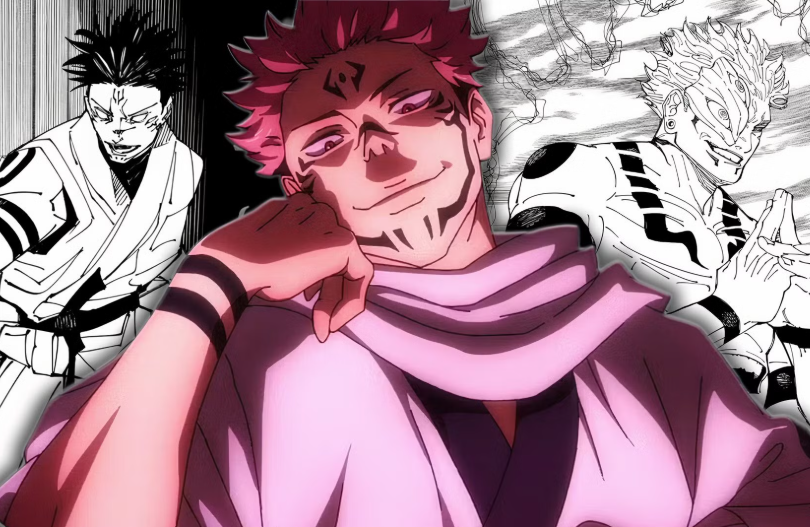
The name Ryomen means “two faces” in Japanese, which applies to Sukuna both literally and as a character. His true form has four arms and two faces. His Heian Era presence was so threatening that Japanese imperial authorities held public festivals in his honour simply to avoid further conflict with him. He was not a monster in the mythological sense. He was a human sorcerer who became something beyond what that word could contain.
After his death his soul was split into twenty mummified fingers. These fingers are indestructible Special Grade cursed objects that traversed the centuries, drawing curses and catastrophe wherever they were held. He waits inside them for the right vessel.
The Real Ryomen Sukuna: Mythology Behind the Character
The Ryomen Sukuna of JJK is based on an actual figure from Japanese mythology, described in the Nihon Shoki, one of Japan’s oldest chronicles.
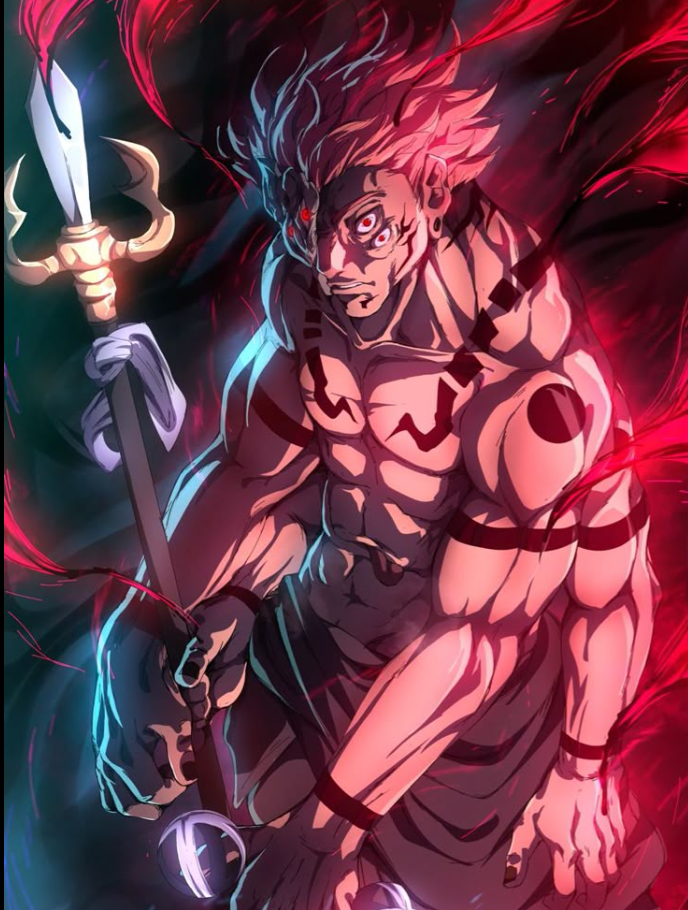
In the original mythology, Ryomen Sukuna was a figure from ancient Hida Province described as having two faces on a single head and four arms and legs on each face. He terrorised villages across the region until a military commander dispatched by the Imperial Court defeated him.
Some communities worshipped him as a minor deity, and statues depicting his two-faced form can still be found today in temples and shrines in Gifu Prefecture.
Akutami took this mythology and transformed it into something specific to the JJK world: a human sorcerer so powerful he was compared to the mythological figure and eventually earned the same name. The historical weight behind the character is part of what makes Sukuna feel genuinely ancient rather than simply powerful.
What Are Sukuna’s Abilities?
Sukuna’s power comes from immense raw cursed energy reserves, complete mastery of Reverse Cursed Technique, his innate Shrine technique with three distinct applications, and one of the most uniquely structured Domain Expansions in the manga.
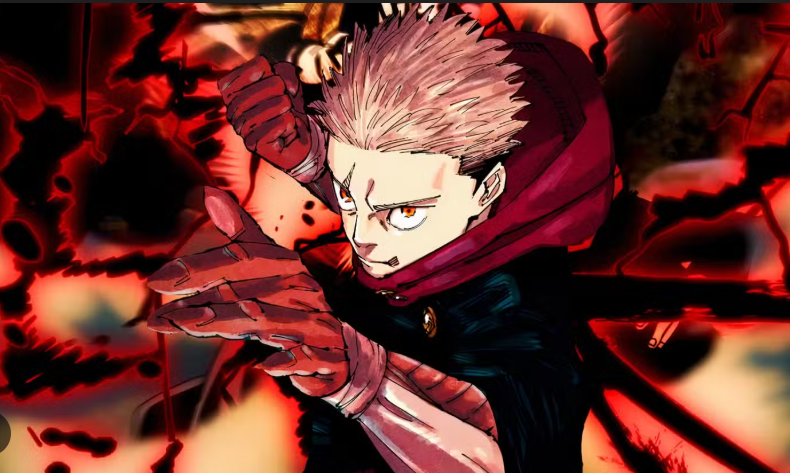
Shrine: Dismantle and Cleave
Sukuna’s innate technique is Shrine. Its primary function is cutting, expressed through two applications. Dismantle fires invisible high-velocity slashes at a fixed output regardless of the target. It is the default form for attacking objects and environments.
Cleave adjusts its output in real time based on the cursed energy and physical composition of the target, making it specifically optimised for killing sorcerers. Both can be used simultaneously and at range.
The World-Cutting Slash, the technique that kills Satoru Gojo, is an evolved application of Dismantle. Sukuna expands its target from a specific object to the entire surrounding space, learned by observing Mahoraga’s adaptation to Gojo’s Infinity.
Divine Flame
Activated by the command “Open,” Divine Flame generates a concentrated burst of flame so intense it overwhelmed Jogo without significant effort. Jogo is a Special Grade disaster curse whose entire identity is built around pyrokinesis.
The technique requires Dismantle or Cleave to be activated first. It is used to devastating effect during the Shibuya Incident when Sukuna burns a massive section of the city alongside Mahoraga.
Reverse Cursed Technique
Sukuna has full mastery of Reverse Cursed Technique, the ability to generate positive energy by multiplying negative cursed energy, which heals the body. He can regenerate from catastrophic damage including missing organs. During the Shibuya Incident he fights for an extended period without his heart and shows no meaningful decline in performance.
Domain Expansion: Malevolent Shrine
Malevolent Shrine is technically unique among all Domain Expansions in the manga. Most domains create a closed barrier that isolates the target inside a sealed space. Malevolent Shrine does not create a barrier at all. It is an open domain where Sukuna manifests his innate domain without enclosing the space, which means targets can technically escape its range.
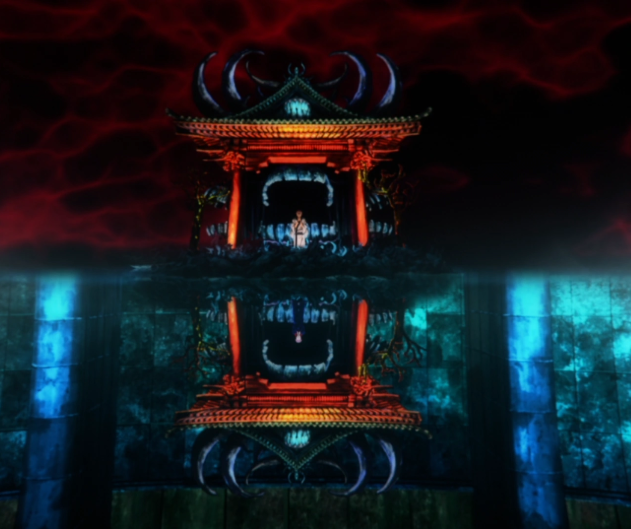
In exchange for removing the barrier, Sukuna enters a binding vow that extends the guaranteed hit radius to approximately 200 metres. Within that radius Dismantle and Cleave activate automatically and continuously against all targets until the domain ends.
Because there is no outer shell, Malevolent Shrine cannot be cancelled by an opposing domain in the conventional way. The only way to end it is to injure Sukuna directly. Its 200-metre guaranteed hit area is the widest of any domain in the series.
Sukuna can also switch to a closed version, reducing the range dramatically in exchange for amplified power concentration.
Ten Shadows Technique
After taking over Megumi Fushiguro’s body in Chapter 212, Sukuna gains access to the Ten Shadows Technique. He uses it to summon and command Megumi’s shikigami, most critically Mahoraga.
Mahoraga’s adaptation ability becomes the tool Sukuna uses to crack Gojo’s Infinity. Sukuna’s mastery of Mahoraga exceeds what Megumi had achieved, and his use of it against Gojo is the single most consequential combat application in the entire manga.
What Is Sukuna’s Personality?
Sukuna is cruel, narcissistic, and operates entirely on self-interest. The manga eventually reveals that his cruelty was shaped by a specific experience of rejection and loneliness that he never allowed himself to process.
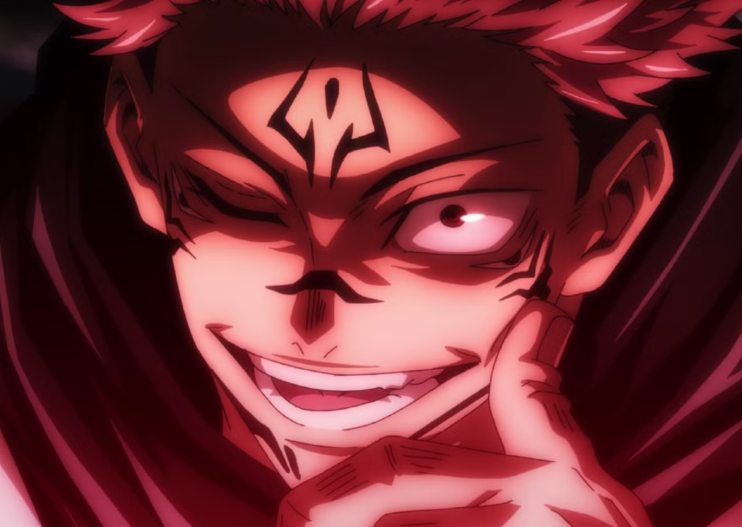
He is indifferent to most people and contemptuous of weakness. He finds genuine interest in very few things: strong opponents, interesting techniques, and food. His hobby is eating. He dislikes nothing in particular because he simply does not care about anything beyond himself. Per Gege Akutami, Sukuna’s fingers taste like soap.
Two relationships reveal something beneath the surface. His respect for Gojo is genuine. He calls Gojo magnificent after their fight and swears to remember him forever. His care for Uraume, his oldest companion, is the closest thing he has to warmth. He encountered a young Uraume in the wilderness surrounded by frozen corpses, a child whose power killed everyone around him. Sukuna recognised something familiar and took him in. That decision is the only act of genuine care Sukuna performs across the manga’s timeline.
In the afterlife, Mahito tells Sukuna he spent his entire life seeking revenge for the persecution he suffered as a child, born with four arms and two mouths and treated as an abomination. Sukuna admits he had two choices for how to live and chose revenge. Given a second chance, he wants to choose differently.
What Is Sukuna’s Connection to Yuji?
Sukuna ate his twin in the womb over a thousand years ago because their mother was starving. That twin reincarnated centuries later as Jin Itadori, Yuji’s father. This makes Yuji Sukuna’s spiritual nephew and the descendant of the person Sukuna consumed before either of them had a name.
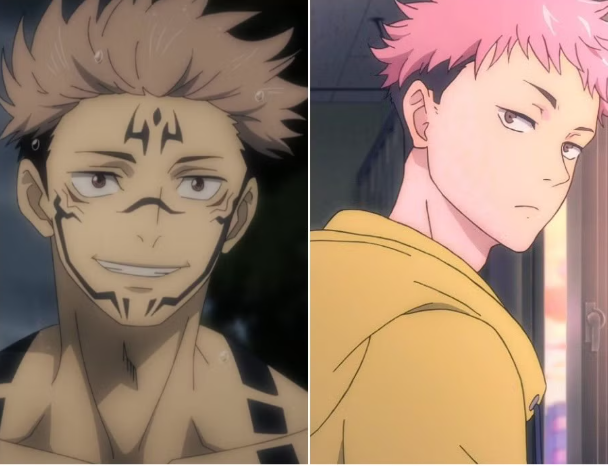
This bloodline connection is part of why Yuji can host Sukuna at all. Anyone else would have been destroyed immediately. It also gives the final confrontation between Yuji and Sukuna a layer of family tragedy beneath the combat mechanics. The person who defeats the King of Curses is his own blood.
What Happens to Sukuna in the Story?
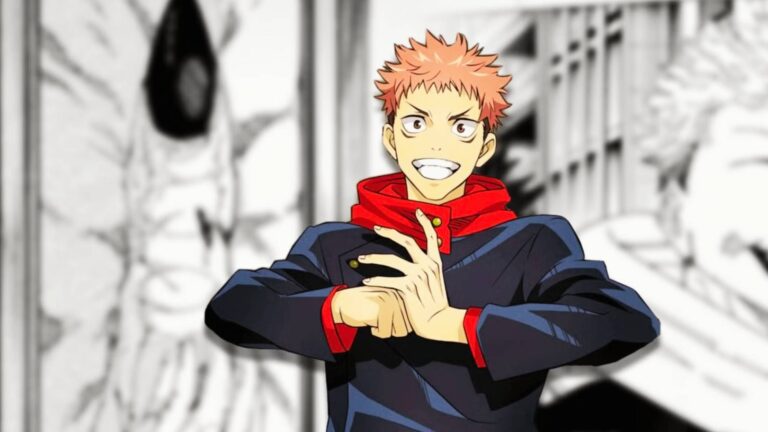
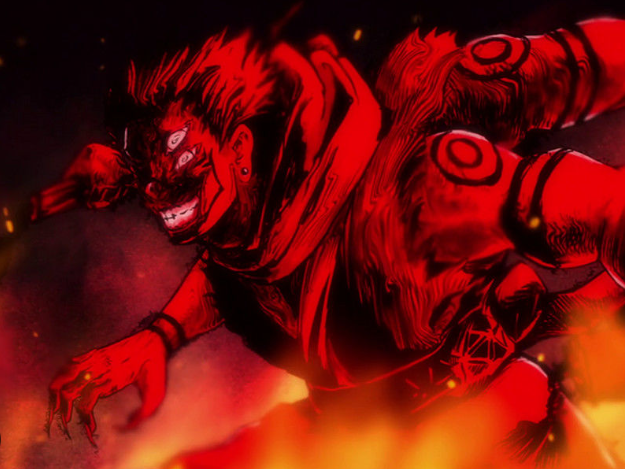
Sukuna awakens inside Yuji in Chapter 1, systematically pursues full reincarnation across the series, kills Gojo in Chapter 236, reaches his true four-armed form during the final battle, and is defeated by Yuji in Chapter 268.
Inside Yuji: Chapters 1 to 212
Sukuna spends the first half of the manga as a passenger in Yuji’s body, waking only when Yuji loses consciousness or gives him control. He is constrained by Yuji’s unusual ability to suppress him but uses every window of freedom to pursue his real goal.
His interest in Megumi begins in Chapter 1, the first time he observes the Ten Shadows Technique in use. He saves Megumi from Mahoraga during Shibuya not out of mercy but because a dead Megumi cannot serve as his vessel. He is engineering his own reincarnation across every appearance.
During Shibuya he defeats Jogo and acknowledges his strength after killing him, one of the rare moments he offers any recognition to an opponent. He then defeats Mahoraga without the Ten Shadows Technique, something no prior user of either the Ten Shadows or the Six Eyes had accomplished. Read Sukuna’s Shibuya sequence from Chapter 109 onwards.
Taking Megumi’s Body: Chapter 212
Using the binding vow placed on Yuji in Chapter 16, the one-minute clause where Yuji cannot resist, Sukuna transfers himself into Megumi’s body. He gains the Ten Shadows Technique. He uses Tsumiki’s death to bury Megumi’s will completely. Megumi, watching his own technique kill the person he entered the Culling Game to save, collapses psychologically. Sukuna’s hold deepens to the point where Megumi effectively stops resisting.
The Final Battle
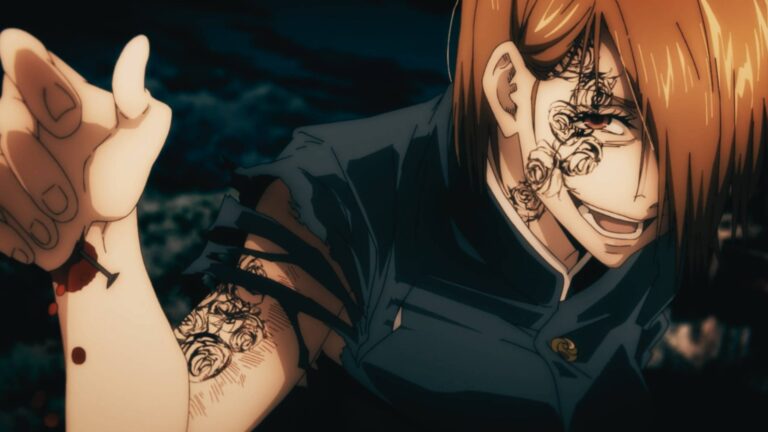
Sukuna fights Gojo across Chapters 223 to 236 in the most technically elaborate combat sequence in the manga. He uses Mahoraga as a model to develop the World-Cutting Slash, kills Gojo, and faces every remaining sorcerer in the Shinjuku Showdown. Kashimo forces his true four-armed form with Mythical Beast Amber. Higuruma delivers the Executioner’s Sword to Yuji. Nobara’s Resonance damages his remaining finger from outside the fight. Yuji defeats him in Chapter 268.
In the afterlife Sukuna chooses to go north, toward reincarnation and a different life. He walks away from Mahito with Uraume beside him. His last finger, now emptied of his soul, sits in a shrine in Chapter 271 as a protective talisman rather than a cursed object.
What Does Sukuna Represent in the Manga?
Sukuna is the manga’s argument that strength without connection produces nothing worth preserving. He is also its most honest answer to the question of what happens when someone capable of anything chooses not to.
Every major character in JJK is defined by who they fight for. Yuji fights for a proper death for others. Gojo fights to protect the next generation. Even Mahito fights for the idea that curses deserve to exist. Sukuna fights for himself, entirely and always, and the manga shows exactly what that produces over a thousand years.
The ending does not redeem him. It acknowledges that he had a choice all along. That acknowledgement, and his decision to choose differently next time, is the closest the manga gets to mercy for its greatest villain.
For more on how the series handles its ending see the JJK ending explained page and why death is central to Jujutsu Kaisen.