Beyond Manga: Books That Help Explain Jujutsu Kaisen’s Folklore
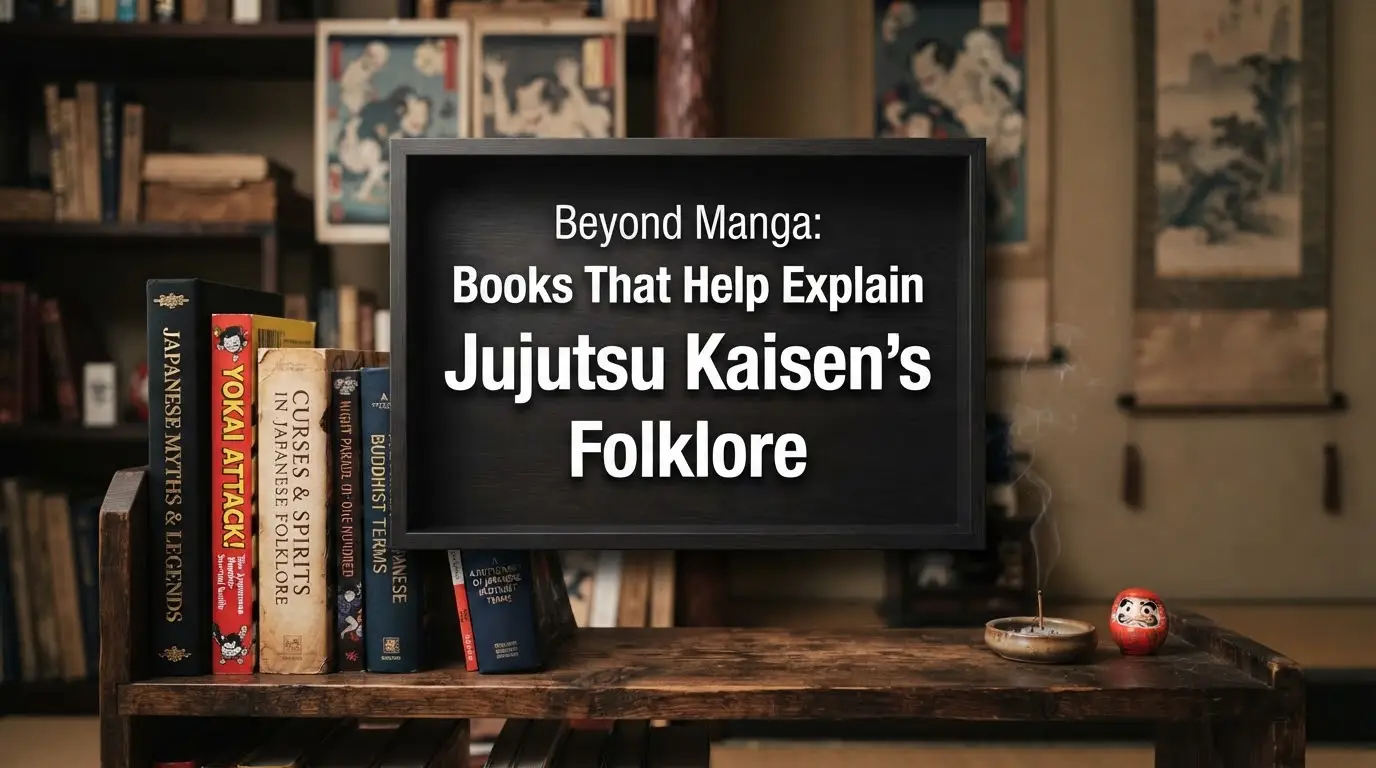
Books on Japanese folklore, yokai, Shinto, and Buddhism can clarify ideas that echo through Jujutsu Kaisen. This guide shows how Z library searches can help identify contextual reading, and how to check editions and claims against other sources. Such books offer context for Gege Akutami’s world, but they cannot decode every character or plot event: the manga’s power system is an original fictional construction.
Folklore ideas that make Jujutsu Kaisen’s curses easier to read
One useful interpretation is to read the series’ curses as fictional forms of fear, resentment, violence, and social anxiety. This offers a point of comparison with Japanese ghost stories and religious traditions, where harmful forces may be associated with unsettled deaths, pollution, broken boundaries, or intense human emotion. The resemblance is thematic, not documentary.
Yokai offer a useful comparison, but the term covers many kinds of beings and phenomena. Some accounts describe monsters; others focus on strange events or transformations. A reference book can show how portrayals change by region and period. Yurei, in some popular and literary depictions, are the dead who remain attached to the human world, perhaps because of grief, injustice, or unfinished business. Accounts vary across sources and periods.
These categories overlap with curses only in part. In Jujutsu Kaisen, curses follow the manga’s invented rules, including their relationship to cursed energy and jujutsu techniques. Treating every curse as a traditional yokai misses the series’ own choices.
Books on yokai, Shinto, and buddhist imagery
Yokai reference works are a good first stop for readers seeking vocabulary. Look for explanations of regional traditions, variant spellings, and historical changes. A strong book distinguishes oral stories, religious narratives, artwork, and modern popular culture rather than treating them as one body of folklore.
An introductory book on Shinto can help frame purity, pollution, sacred spaces, taboos, and ritual boundaries. These ideas depend on context. Pollution is not a simple equivalent of moral evil, nor does purity always mean goodness. That distinction can help readers compare ritual imagery in the manga without treating its fictional rules as a direct account of Shinto.
Accessible Buddhist studies can illuminate suffering, attachment, death, impermanence, and desire. Start with the terms. But don’t use them to label the entire manga a Buddhist allegory. Buddhism includes different schools, practices, and interpretations; Jujutsu Kaisen reshapes and combines ideas for dramatic purposes. Z-lib may appear in digital catalog searches, but check edition details against publishers, libraries, museums, or university catalogs.
When choosing an introduction, look for clear bibliographies, named translators, and discussion of historical or regional variation. Translation and transliteration choices can affect the English terms used for Japanese concepts, so check whether the author explains those choices.
How z library searches can support background reading
Readers searching for Z library may encounter broad online catalog pages on folklore and mythology. Availability, copyright status, safety, and legality vary by title and jurisdiction. A search result alone does not establish that a download is lawful or that a copy is complete.
Search results can help identify subjects, authors, or editions. Depending on the service, a listing may point to a preview, a public-domain book, licensed digital lending, or only a bibliographic record. Treat pages such as Zlib as leads, not guarantees, and verify details with a library, publisher, museum, or university catalog.
Where to start when the manga raises a folklore question
Begin with one accessible book on Japanese folklore or yokai. Check its bibliography, translation credits, and coverage of regional or historical differences. If a particular theme holds your attention, add an introductory Shinto or Buddhist work rather than buying several general mythology books at once.
Read the historical description beside the manga scene. Ask whether the source is scholarly, popular, fictionalized, or written for children. Account for regional variation and translation choices, then return to the manga and test your interpretation. The source gives context; the manga remains the primary text.